

Choose installed value over price: pods vs booths for office managers
Choose a pod for confidential calls and focused solo work, and choose a booth when you need flexible, informal space for two or three people to collaborate without disturbing the room. The distinction comes down to privacy versus flexibility: pods are typically sealed, higher-rated enclosures built to standards like ISO 23351-1:2020, while booths favour open access and quick use. ALXR stocks both, so the comparison below will help you match the right option to the job.
TL;DR:
- Acoustic pods rated Class A or B provide high confidentiality for sensitive conversations, while open-front booths primarily reduce distractions without ensuring privacy.
- Meeting pods for four or more people require significantly more space and ceiling height compared to one-person units, impacting room planning.
- Laboratory-verified acoustic ratings based on ISO 23351-1 differ from supplier claims, so always request independent Ds,a reports to ensure true confidentiality levels.
- Fire safety, ventilation, and electrical compliance are critical considerations in installation, requiring early coordination with facilities teams to avoid costly retrofits.
- Long-term value depends on factors like portability, warranty coverage, and maintenance costs, with larger, more complex pods generally costing more upfront but offering better durability.
Table of Contents
- Comparing acoustic pods and booths at a glance
- Acoustic performance and standards: what the numbers mean in practice
- Installation, compliance and environmental checklist
- Cost, installed value and procurement models
- Selection checklist and supplier questions to ask
- Comparison of maintenance and cleaning requirements for pods vs booths
- Long-term durability and material resilience differences
- Typical timelines for purchasing, installation, and setup of pods vs booths
- Balancing confidentiality and flexibility in modern offices
- How ALXR can help with your acoustic solutions
- Key standards and industry guidance
- Sources
- FAQ
Comparing acoustic pods and booths at a glance
The right choice depends on what you’re protecting: the conversation inside the space, or the concentration of people outside it. Acoustic performance is usually described using classification bands, and understanding these makes supplier quotes far easier to compare.
- Privacy and acoustic rating: Sealed pods rated Class A or B suit confidential HR conversations and client calls, while open-fronted booths with absorptive panels reduce distraction rather than block speech entirely.
- Best-for use cases: Single-person pods handle phone calls and deep focus work, two-to-four person pods suit confidential small meetings, and booths work well for casual huddles or quick video calls where full privacy isn’t essential.
- Footprint and capacity: One-person pods typically start around 0.7 to 1 square metre internally, while meeting pods for four people need considerably more floor space and ceiling height.
- Mobility and relocation: Many pods are designed to be dismantled and rebuilt elsewhere, whereas simpler booths can sometimes be wheeled or lifted without full disassembly.
- Power and AV complexity: Enclosed pods with ventilation fans, lighting and screens need proper electrical containment, while basic booths may need little more than a socket.
If your business changes desk layouts often, mobility matters as much as acoustic rating. A pod that cannot be relocated without a specialist team becomes an expensive fixture rather than a flexible asset.
Acoustic performance and standards: what the numbers mean in practice
Acoustic claims on pod and booth listings can be difficult to compare unless you understand the metric behind them. ISO 23351-1:2020 sets out a laboratory method for measuring speech level reduction, reported as a single figure called Ds,a, which is calculated from sound level reduction across octave bands from 125 Hz to 8,000 Hz.
That single number then maps to a classification scheme used across the industry. Class A products, with a speech level reduction above 30 dB, offer the highest level of confidentiality and suit sensitive conversations. Class B, at 25 to 29 dB, is generally accepted as sufficient for standard office confidentiality. Class C (20 to 24 dB) and Class D (15 to 19 dB) reduce distraction rather than guarantee privacy, and anything below 15 dB is considered unclassified and largely ineffective for confidential speech.
The complication is that not every supplier tests the same way. Industry commentary on pod acoustic testing points out that test methods and reporting vary considerably, which led the FIS to work with acoustic consultants and university partners on an Acoustic Classification Scheme that translates different test formats into a single comparable rating aligned with ISO 23351-1. Site testing and laboratory chamber testing are not the same exercise, and a figure taken from one does not automatically transfer to the other.
Before you commit to a purchase, ask the supplier for the laboratory Ds,a report or an independently verified classification rather than accepting a headline dB figure on a product page. For quiet open-plan offices where confidential conversations happen regularly, only Class A or B solutions are worth considering.

Installation, compliance and environmental checklist
Pods interact with a building’s fire strategy and ventilation systems in ways that booths often do not, so this stage deserves early attention from facilities and compliance teams. Building-regulations guidance for office pods notes that enclosed pods may need roughly 300 millimetres of overhead clearance to accommodate sprinkler systems, along with a smoke detector interface so the building’s fire alarm remains audible and effective inside the enclosure.
Ventilation is just as important. The same guidance recommends fresh-air rates of around 10 litres per second per person, or 1 litre per second per square metre, and warns that a basic recirculation fan often fails to meet this in poorly ventilated rooms. Pods intended for extended occupancy, particularly multi-person meeting pods, should be specified with HVAC-integrated ventilation rather than passive airflow.
Beyond fire and air, check power routing, lighting circuits, data and AV cabling paths, and whether the pod’s floor loading is compatible with your building. Servicing access matters too: filters, fans and electrics need to be reachable without dismantling the whole unit.
At handover, a proper commissioning process should confirm smoke-alarm audibility inside the enclosure, verify measured ventilation rates against the specification, and provide written documentation you can keep on file for future compliance checks. Coordinate this early with your building-services team rather than leaving it until installation day, since retrofitting a ventilation upgrade after a pod is bolted down costs far more than specifying it correctly from the outset.

Cost, installed value and procurement models
Headline price rarely tells the full story with pods and booths, and the units that look cheapest on a quote can end up costing more once relocation, warranty gaps and servicing are factored in. Size, glazing, ventilation hardware and integrated AV all push price upward, and a fully specified meeting pod with HVAC and screens will always cost more than a simple one-person acoustic booth.
Procurement commentary on long-term pod strategy describes a shift toward evaluating ‘installed value’ rather than purchase price alone: relocation cost if the office is reconfigured, warranty coverage on electrical and mechanical components, and circular options such as refurbishment or lease-to-own. Treating a pod as a relocatable asset rather than a fixed cost changes how it should be budgeted.
Ongoing costs are modest but real: filter replacement, occasional electrical servicing, and standard cleaning. When presenting a business case to finance, frame the request around total cost of ownership across the expected lifespan, not just the invoice total, and include relocation and warranty terms as line items rather than afterthoughts.
Selection checklist and supplier questions to ask
Work through this order when evaluating quotes so you don’t specify acoustic performance before you’ve confirmed the basics.
- Define the use case (confidential calls, small meetings, casual huddles) before looking at products.
- Set the acoustic class requirement based on that use case, using Class A or B for confidential work.
- Confirm footprint and capacity against your available floor space and expected occupancy.
- Check ventilation provision and whether HVAC integration is required for the intended occupancy.
- Assess power and AV needs, including screens, cabling and lighting.
- Review warranty terms, covering both furniture and mechanical or electrical components.
- Clarify relocation terms in case the office layout changes within the warranty period.
When speaking to suppliers, ask for the ISO Ds,a laboratory report rather than a marketing dB figure, request the ventilation rate in litres per second per person, and ask exactly how the unit interfaces with your existing smoke alarm system. Also confirm what commissioning includes and whether warranty covers ventilation fans and electrics, not just the shell.
Treat vague answers as a red flag. A supplier who cannot produce a lab report, cannot explain ventilation figures, or is unclear about fire-alarm interfacing is not ready for a compliance-sensitive installation.
Pro Tip: Ask for the FIS classification alongside the raw Ds,a figure. It gives you a like-for-like comparison across suppliers who test differently.
Comparison of maintenance and cleaning requirements for pods vs booths
Sealed pods generally need more structured maintenance than open booths, simply because they contain more moving parts. Ventilation fans and filters need periodic checks and replacement to keep airflow at specified rates, and any integrated lighting or AV hardware should be included in a routine electrical inspection schedule. Glazed panels also need regular cleaning to avoid a build-up of fingerprints and smudges, since glass is usually the most visible surface in the room.
Booths, particularly open-fronted or lightly enclosed versions, are simpler to maintain because there is less to service. Upholstered acoustic panels need occasional vacuuming or spot cleaning, and there’s typically no fan, filter or sealed door mechanism to inspect. This makes booths a lower-maintenance option for businesses without a dedicated facilities team.
Both formats benefit from a basic cleaning routine that matches how heavily they’re used. A single-person focus pod used for back-to-back calls will need more frequent surface cleaning than an occasional-use meeting pod, and high-traffic booths in open-plan areas will show wear faster than ones tucked into quieter corners. Building a simple maintenance checklist into your facilities schedule, covering fans, seals, glazing and upholstery, avoids performance dropping off unnoticed over time.
Long-term durability and material resilience differences
Durability differences between pods and booths largely come down to construction method. Fully enclosed pods use rigid panel systems, often with steel or aluminium frames, glazed doors and acoustic core material sandwiched between layers. This construction tends to hold its acoustic rating well over years of use, provided seals and door mechanisms are maintained.
Booths vary more widely in build quality. Some use similar panel construction to pods at smaller scale, while others rely on upholstered foam or felt panels over a lighter frame. These lighter builds are generally quicker to install and reposition, but upholstery can wear, compress or discolour with heavy daily use, gradually reducing sound absorption.
Door and seal mechanisms are usually the first component to show wear in enclosed pods, particularly in high-traffic offices where a unit might be opened and closed dozens of times a day. Choosing a pod with a robust, serviceable door mechanism, and confirming what’s covered under warranty, protects the acoustic performance you originally paid for. For booths, checking the grade of upholstery fabric and foam density up front gives a reasonable indication of how well the unit will hold up over several years of daily use.
Typical timelines for purchasing, installation, and setup of pods vs booths
Booths are generally the faster option to get up and running. Simpler, lightweight booths can often be ordered, delivered and placed within a matter of weeks, since there’s minimal building-services coordination required beyond a power socket.
Pods take longer, mainly because of the compliance steps covered earlier. Once an order is placed, manufacturing lead times vary by size and specification, and installation needs to be scheduled alongside building-services coordination for ventilation and fire-alarm interfacing. Site surveys, sprinkler clearance checks and commissioning add further time before the unit is ready for use, so a fully specified meeting pod with HVAC integration should be planned as a multi-week project rather than a same-month delivery.
Building in time for commissioning and sign-off avoids a common pitfall: a pod that arrives and is installed but cannot be used because ventilation or fire-alarm compliance hasn’t been verified. Factoring realistic lead times into your procurement timeline, and flagging compliance milestones to stakeholders early, keeps the project moving without last-minute delays.
Balancing confidentiality and flexibility in modern offices
The conventional wisdom treats acoustic pods and booths as interchangeable “privacy furniture,” but they solve different problems. A pod is a compliance and confidentiality investment, built around a measurable acoustic standard and a fire-and-ventilation checklist. A booth is a flexibility investment, designed to be moved and reused as teams reorganise. Businesses that buy the wrong one for the job end up with either an underused Class A pod sitting empty in a quiet corner, or a lightweight booth that fails to protect a genuinely confidential conversation.
The supplier’s catalogue spans over 10,000 products across commercial, healthcare and educational settings, including options for nationwide delivery and installation.
— Syed
How ALXR can help with your acoustic solutions
Getting acoustic pods and booths right is rarely just a furniture decision. It touches compliance, electrical work and long-term flexibility, and that’s where guided support makes the difference between a good quote and a workable installation.
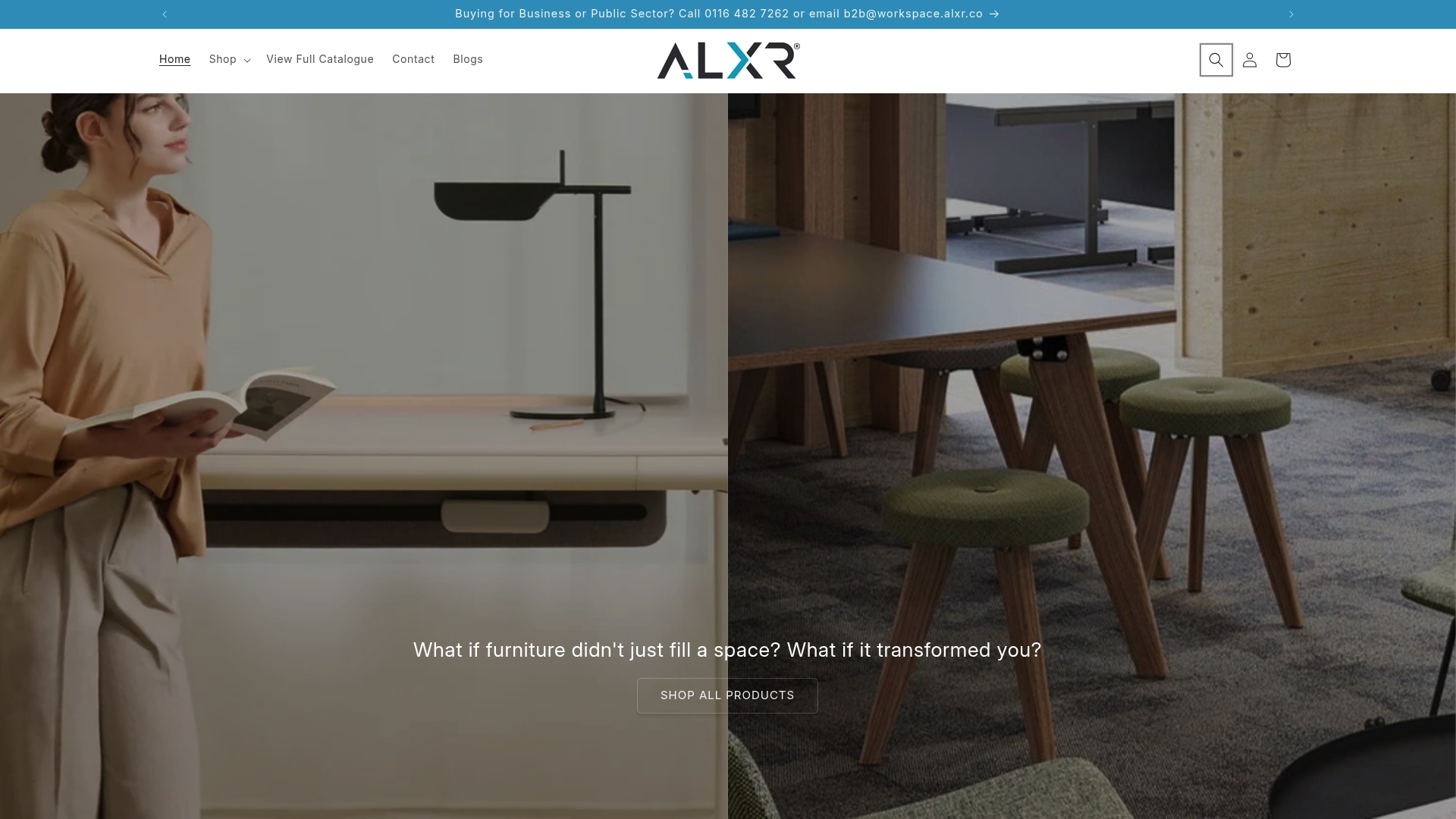
- Space planning and design support to work out which acoustic solution fits your floor plan and occupancy needs.
- Delivery and installation services to help coordinate compliance steps like ventilation checks and fire-alarm interfacing.
- Warranty support and options such as refurbishment or leasing that aim to protect the installed value of your purchase.
- A catalogue of products, including Booths & Pods alongside desks, chairs and storage to support workspace needs.
Once you know your acoustic class requirement and rough footprint, pairing the space with the right furniture is straightforward. Options like the Twin Upright Rectangular Desk + Mobile 3 Drawer Pedestal (FSC) 800 or the Vision Mesh Office Chair work well alongside a focus pod, while a Zip Mesh Back Chair with Folding Arms suits a casual booth setting. Speak to a specialist to request a site acoustic assessment or ask for Ds,a and classification data on any pod you’re considering.
Key standards and industry guidance
For further reading, consult ISO 23351-1:2020 for the laboratory speech-reduction method, Sweco’s building regulations guidance for compliance detail, and SpecFinish’s commentary on pod acoustic testing for classification context. For alarm interfacing specifics, specialist installers may also reference technical alarm guidance.
Sources
- ISO 23351-1:2020 - Acoustics — Measurement of speech level reduction of furniture ensembles and enclosures — Part 1: Laboratory method
- Building regulations guidance for office pods - Sweco United Kingdom
- Acoustic performance of configurable meeting pods - SpecFinish
- Acoustic pods as part of your long-term strategic plan - NeoCon (industry blog)
FAQ
What’s the difference between pods and phone booths?
A phone booth is typically a single-person enclosure designed for calls and short focus sessions, often with lighter construction and a lower acoustic rating. Pods can range from one-person units to larger meeting spaces, and higher-rated pods are built to standards like ISO 23351-1 for genuine speech confidentiality.
What is the best soundproof recording booth for home use?
Dedicated recording booths sit outside standard office acoustic classifications, since they’re built around sound isolation for audio production rather than speech privacy for meetings. For home office confidentiality rather than recording quality, a Class A or B rated acoustic pod is the more relevant comparison.
Why are some acoustic pods expensive?
Price rises with size, glazing, integrated ventilation and AV fit-out, and with the acoustic class achieved. A fully specified meeting pod with HVAC integration and a laboratory-verified Class A rating costs considerably more than a basic open-fronted booth, largely because of the engineering and testing behind the acoustic claim.
Are meeting pods soundproof?
No enclosure is completely soundproof, and pods are rated by how much they reduce speech level rather than eliminate it entirely. A Class A pod, rated above 30 dB speech level reduction under ISO 23351-1, offers strong confidentiality but is not an absolute guarantee against all sound transmission.