

10 Breakout Space Furniture Ideas UK Offices Can Specify and Install
The best breakout spaces combine comfortable soft seating, modular and mobile furniture, acoustic solutions, and height-varied tables with integrated power. Durability and built-in charging are not optional extras in commercial settings; they are the difference between a space staff use daily and one that gathers dust. There are ergonomic, NHS-approved furniture ranges available that make this specification work in practice.
TL;DR:
- Modular and mobile furniture pieces, such as trapezoidal tables and height-varied seating, are essential for flexible office layouts that serve multiple purposes.
- Durable, easy-clean upholstery and integrated power sources are non-negotiable to ensure daily heavy use and seamless device charging.
- Zones should be clearly signaled through furniture choice, with specific designs for social, collaborative, quiet, café, and small-touchdown areas.
- Acoustic solutions like pods, booths, and panels are crucial for private calls and sound zoning, especially in leased office spaces.
- Sustainability considerations, including FSC-certified materials and reconfigurable furniture, help extend lifespan and reduce environmental impact.
Table of Contents
- Top breakout space furniture ideas for UK offices
- Matching furniture to breakout zones
- Materials, durability and acoustic choices for heavy use
- Power, lighting and mobility considerations
- How Alxr supports breakout furniture projects
- Ergonomics and comfort in breakout furniture
- Design aesthetics and style trends across workplace cultures
- Sustainability and eco-friendly furniture choices
- Three mistakes that waste a breakout furniture budget
- Order the pieces that make a breakout space work
- Sources
- FAQ
Top breakout space furniture ideas for UK offices
Getting breakout area design right means matching each piece to how people actually behave, not how a brochure photo looks. Below are ten furniture ideas that consistently earn their floor space, drawn from what workplace consultants and furniture specialists see working in real offices.
- Soft sofas. Two or three-seat sofas anchor a social lounge and invite people to linger. Choose commercial-grade fabric and test the cushion firmness against real use, not showroom sitting. Fixed placement is fine here; comfort matters more than mobility.
- Modular sofa systems. Corner and bench units that reconfigure let you turn a lounge into a presentation huddle in minutes. Look for connecting brackets rather than loose cushions, which drift out of alignment within weeks.
- Acoustic pods. Fully enclosed or semi-enclosed pods give one or two people genuine privacy for calls without booking a meeting room. They are heavy and largely fixed once installed, so plan the location carefully before ordering.
- High-backed banquettes. Booth seating with a tall back doubles as an acoustic screen and a seating solution, useful where you want zoning without partition walls. Vinyl or commercial wool blends wipe clean fastest.
- Café and high tables with stools. Bar-height setups suit quick catch-ups and change the energy of a room compared with standard-height meeting furniture. Stools should have footrests; without one, nobody stays seated long.
- Trapezoidal and modular meeting tables. Shapes like the Trapezoidal Multi-purpose Table push together into diamonds, chevrons, or long runs, so one table type serves training, workshops, and small huddles. This is the single most flexible table format for a breakout area that has to earn its keep across several use cases.
- Pouffes and ottomans. Lightweight and stackable, these add flexible perching without committing to fixed seating counts. Great for overflow capacity during all-hands sessions.
- Benches with integrated storage. A bench that doubles as a locker or lost-property store solves two problems in one footprint, particularly useful in smaller offices.
- Moveable writable surfaces. Mobile whiteboards or writable table tops turn a casual seating cluster into a working session without needing a dedicated whiteboard wall.
- Charging-integrated tables. Any table sited near soft seating should carry at least one recessed socket or USB point, otherwise laptops end up balanced on knees near the nearest wall outlet.
Common breakout furniture such as soft seating, modular seating, high tables and stools, acoustic pods, and writable surfaces remain in ongoing demand across UK offices, largely because they solve genuine behavioural problems rather than just filling space.
Matching furniture to breakout zones
Good breakout furniture design starts with zone logic: what’s the space for, and does the furniture signal that clearly enough for staff to use it without instruction. Workspace design guidance consistently points to furniture selection as the strongest signal of permitted behaviour in a shared space.
A well-planned floor typically needs four or five distinct patterns rather than one generic “breakout corner,” since hybrid teams use different zones for different energy levels and tasks.
- Social lounge: low sofas and coffee tables at 400 to 450mm seat height, minimal acoustic control needed, allow 1,200mm clearance for circulation.
- Collaborative workspace furniture zone: modular tables at standard 720 to 750mm height with mobile chairs, moderate acoustic buffering from soft flooring or nearby screens, generous clearance for people moving equipment.
- Focus/quiet zone: high-backed single seating or an acoustic pod, strong sound dampening required, positioned away from circulation routes entirely.
- Café/work café: bar-height tables and stools at 1,050 to 1,100mm, light acoustic treatment, near a coffee point for natural footfall.
- Small-space touchdown corners: a compact desk pairing works better than soft seating where floor space is tight. The Twin Upright Rectangular Desk + Desk High 3 Drawer Pedestal suits a fixed café-desk set-up, while the Twin Upright Rectangular Desk + High Mobile Pedestal variant gives teams a storage unit they can wheel to a different bench entirely.
Mixing zone types on the same floor, rather than installing a single breakout style everywhere, is what keeps utilisation high across a working week.
Materials, durability and acoustic choices for heavy use
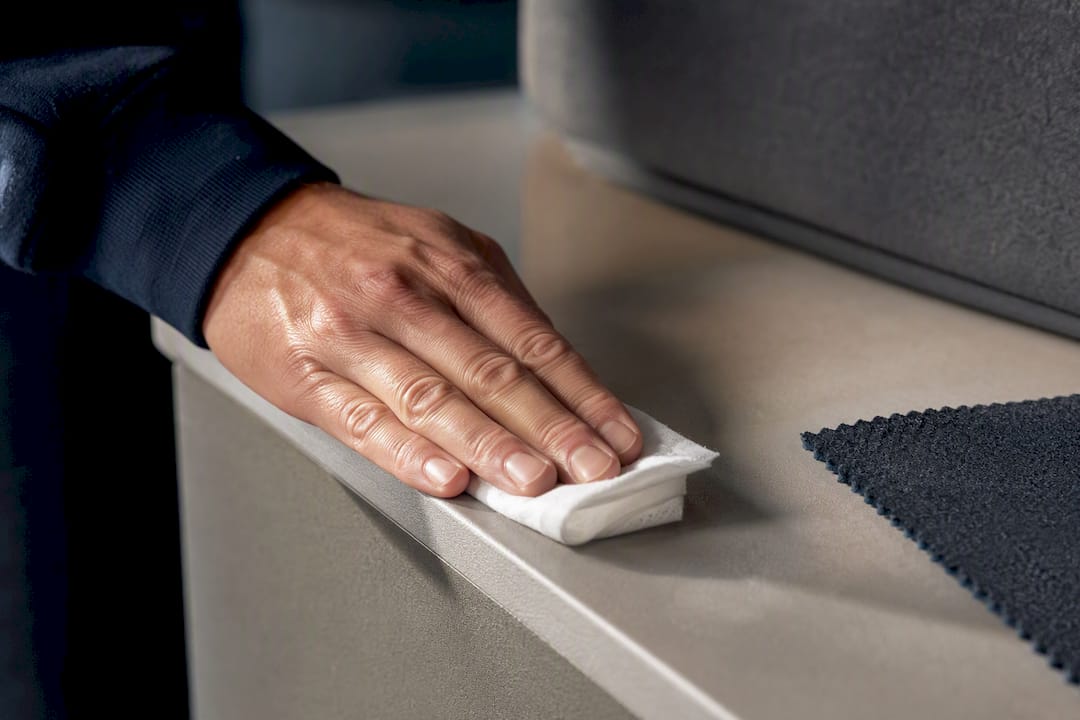
Commercial-grade upholstery and easy-clean finishes should be non-negotiable in any procurement brief. Specification guidance for UK offices recommends stain-resistant fabrics and wipeable surfaces precisely because breakout furniture takes far more daily contact than a boardroom chair.
For acoustic control, high-backed sofas and booths work well for light sound zoning, acoustic pods suit fully private calls, and freestanding screens or panels are the fastest fix when you can’t move walls. Acoustic furniture creates a localised sound environment without any structural work, which matters enormously in leased offices where landlord approval is slow or impossible.
Pro Tip: Before signing off on any seating order, run a 20-minute comfort test: sit in the sample chair for a genuine, uninterrupted 20 minutes. If you’re fidgeting before the timer runs out, staff will avoid it entirely.
- Choose modular, mobile pieces where the layout might change within 12 months.
- Prioritise finishes that survive spilled coffee and daily handling over ones that only look good on day one.
- Factor lifecycle cost, not just purchase price, into any comparison between two upholstery grades.
Power, lighting and mobility considerations
Flexible office seating solutions only work if the room around them supports the way people actually use laptops and phones. A practical checklist for procurement:
- Fit recessed power and at least one USB point into every table near soft seating; plan for one outlet per two seats as a minimum.
- Mix warm ambient lighting with task lighting over work surfaces, since layered, warmer lighting helps a breakout area read as genuinely different from the main office floor.
- Leave clear circulation paths and specify casters or lightweight frames wherever reconfiguration is likely.
- Budget roughly by zone: lounge seating typically sits at a lower per-seat cost than acoustic pods or powered café tables, so weight spend towards the zones getting heaviest use.
How Alxr supports breakout furniture projects
Specifying furniture is only half the job; getting it delivered, fitted, and warrantied correctly is the other half. There are suppliers with large catalogues of ergonomic products, offering delivery and installation across commercial, healthcare, and education sectors. That combination matters for procurement teams who need one supplier accountable for space planning, on-site fitting, and aftercare, rather than juggling several trades.
This article was written by Syed, drawing on hands-on knowledge of specifying ergonomic commercial furniture for demanding, high-turnover workplaces. For flexible touchdown and reconfigurable layouts, the Trapezoidal Multi-purpose Table and the Twin Upright desk ranges are consistently practical starting points.
Ergonomics and comfort in breakout furniture
Ergonomics in a breakout space works differently than at a desk. Staff aren’t sitting for eight-hour stretches, but poor seat depth, no lumbar support, or an unstable base will still push people back to their desks within minutes.
Seat height matters more than most planners expect. A sofa that sits too low is hard to get out of gracefully in front of colleagues, which quietly discourages use by anyone worried about mobility or simply dignity. Aim for a mix: some lower lounge seating for genuine relaxation, and some higher, firmer chairs for people who want to work rather than recline.
Armrests deserve attention too. A chair without them forces people to hold a laptop awkwardly on their knees; one with armrests set too high blocks natural typing posture. Test this alongside the 20-minute comfort check rather than assuming any “ergonomic” label covers it.
Table height relative to seat height is the detail most often missed. A coffee table paired with a deep sofa invites people to hunch forward for ten minutes, then give up and walk to a desk. If a zone is meant for actual work rather than a quick chat, pair proper worksurface height with supportive seating, not lounge furniture stretched beyond its purpose.
Design aesthetics and style trends across workplace cultures
Modern breakout area decor increasingly splits along two clear paths: warm, residential-style lounges with textured fabrics and timber tones, and cleaner, brand-led spaces built around a company’s colour palette and signage. Neither is objectively better; the right choice depends on the culture the space needs to signal.
Creative and media businesses tend to lean into bold colour blocking, mismatched vintage-style seating, and exposed materials that feel deliberately informal. Professional services and healthcare settings usually favour calmer, more consistent palettes, partly because visitors and patients pass through these spaces and expect a degree of polish.
A middle path that suits most UK offices combines neutral, durable bases (grey, charcoal, muted blue upholstery) with one or two accent pieces in a stronger colour or pattern. This keeps the space feeling considered without requiring a full redesign every time trends shift. Whatever the aesthetic, consistency between zones still matters. A breakout floor that looks like three unrelated showrooms stitched together reads as chaotic rather than characterful, however good each individual piece is.
Sustainability and eco-friendly furniture choices
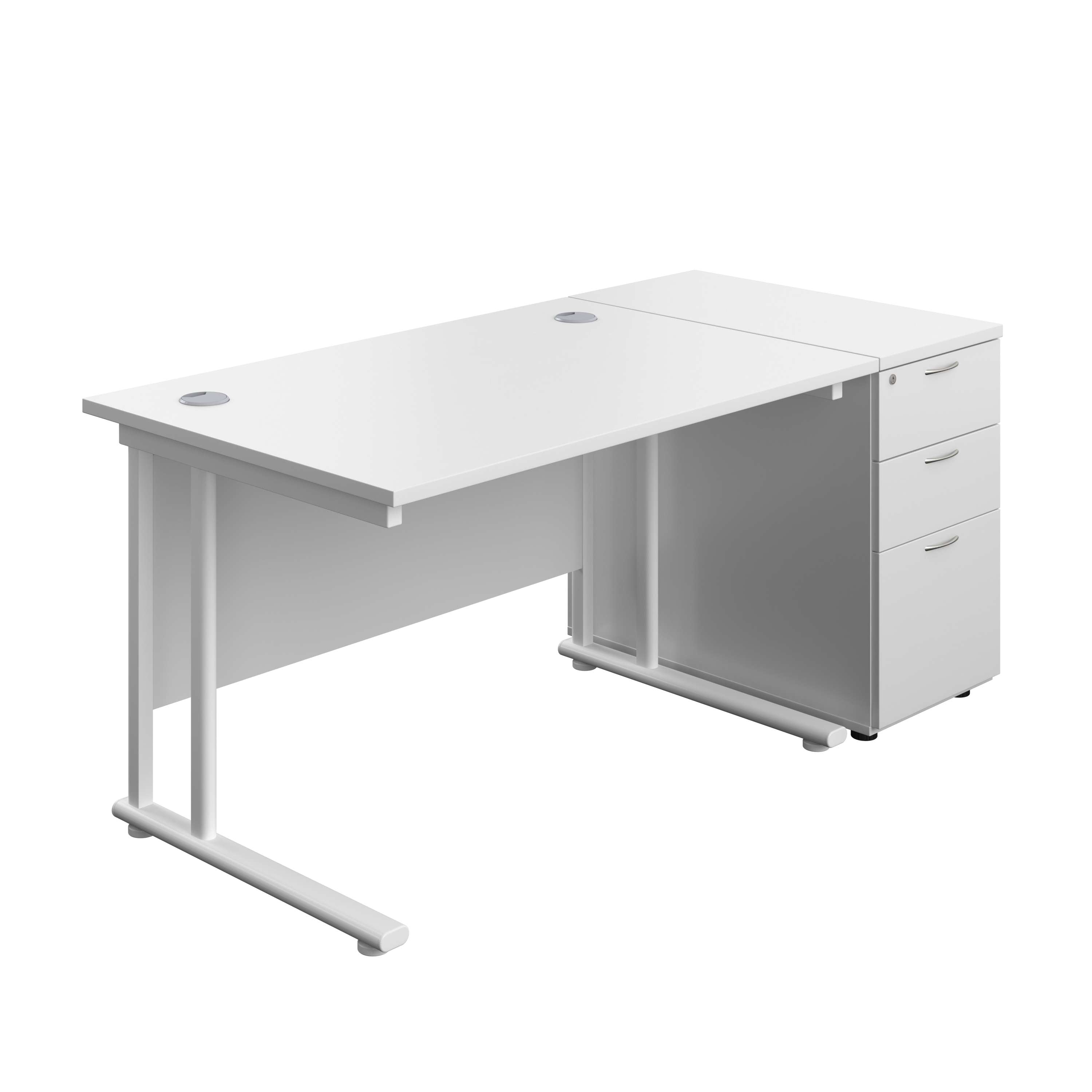
Sustainability now sits firmly on the procurement checklist alongside cost and comfort. FSC-certified timber, which appears across ranges including the Twin Upright desk options, confirms the wood was sourced from responsibly managed forests rather than an unverified supply chain.
Modular and mobile furniture also has a sustainability angle that’s easy to overlook: pieces that reconfigure rather than get replaced when a layout changes have a longer working life, which reduces the churn of furniture heading to landfill every time a department restructures. Choosing durable, commercial-grade upholstery serves the same purpose. A sofa that lasts eight years instead of three is the more sustainable option even before recycled content enters the conversation.
Look, too, at recyclability and repairability at end of life: a table with a replaceable top outlasts one that has to be scrapped whole when the laminate chips. When comparing suppliers, ask directly about the proportion of recycled material in frames and foams, and whether components can be repaired rather than replaced outright.
Three mistakes that waste a breakout furniture budget
One-size seating fails most teams; mix heights and test pieces in-situ before ordering. Ignoring acoustics until after the open-plan changes are made forces expensive retrofits; choose acoustic furniture upfront instead. Treating power as an afterthought means trailing cables everywhere; integrate it during specification, not after delivery.
— Syed
Order the pieces that make a breakout space work
Office managers can source NHS-approved commercial-grade furniture pieces from a supplier offering a comprehensive range, avoiding the need to coordinate multiple vendors and deliveries.
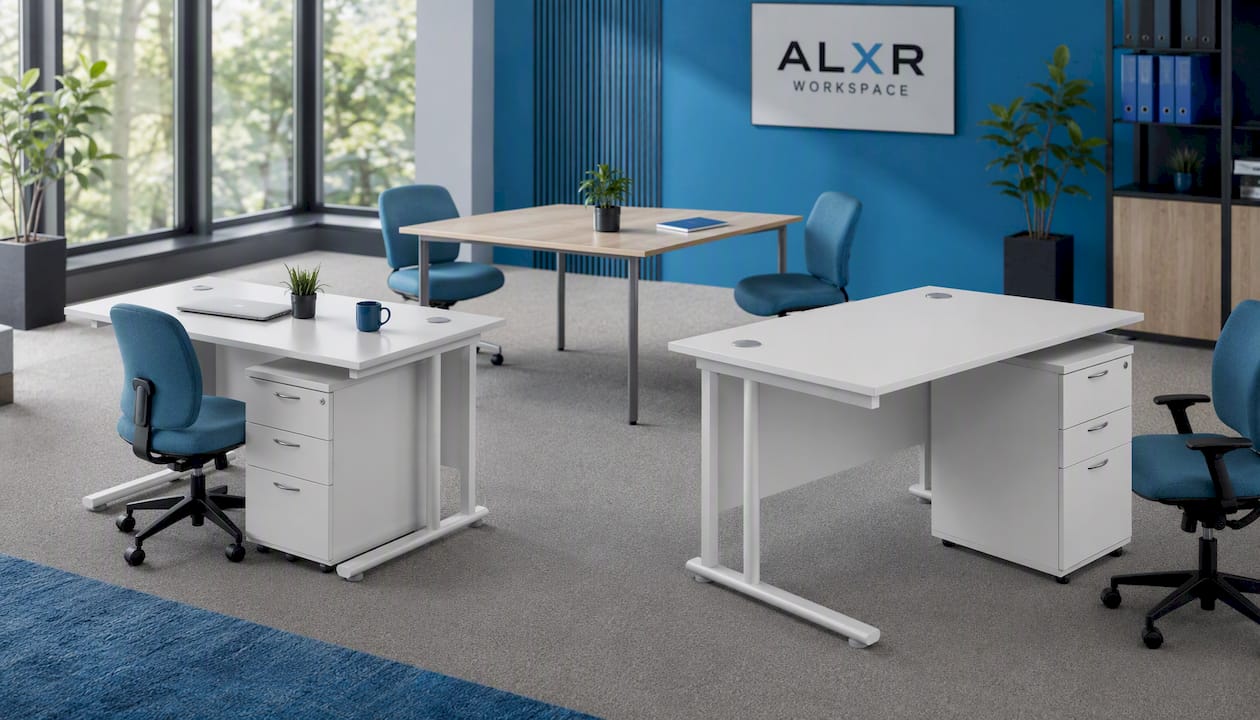
The Trapezoidal Multi-purpose Table suits teams that reconfigure meeting layouts often and need one table shape to cover several room formats. For a robust, low-maintenance work café or touchdown set-up, the Twin Upright Rectangular Desk + Desk High 3 Drawer Pedestal handles daily wear without fuss. Agile teams that need storage to move with them will get more value from the Twin Upright Rectangular Desk + High Mobile Pedestal, which keeps files and kit close to wherever the desk lands next.
Products often come with delivery and installation options so the furniture can arrive ready to use rather than requiring separate on-site assembly. Browse the full range on the Alxr workspace catalogue or request a quote to get a breakout project specified and priced.
Sources
- How to design an office breakout area
- Design effective break out spaces for your UK office
- Office Breakout Furniture: What It Is and Why You Need It
FAQ
What furniture is in high demand right now?
Soft seating, modular seating, high tables and stools, and acoustic pods remain the most consistently ordered breakout furniture items across UK offices, largely driven by demand for flexible, reconfigurable layouts.
What are some fun breakout room ideas for work?
Poseur tables paired with high stools, modular booth seating, and moveable writable surfaces all bring energy to a breakout room without a full refit, and curated inspiration lists often combine these with playful accent colours or games furniture for larger spaces.
What are some good ideas for furniture in small spaces?
Stackable pouffes, wall-mounted fold-down tables, and a single mobile pedestal desk like the Twin Upright Rectangular Desk + High Mobile Pedestal let a compact corner switch between storage, touchdown work, and casual seating without needing separate furniture for each.
What are some unique furniture design ideas for breakout spaces?
Trapezoidal tables that reconfigure into diamonds or chevrons, high-backed acoustic booths that double as zoning walls, and benches with hidden storage all solve two problems with one piece of furniture, which is usually the mark of a genuinely useful design rather than a decorative one.
Does Alxr supply furniture suitable for NHS or healthcare breakout areas?
Yes, Alxr is an NHS-approved supplier with ergonomic ranges designed for commercial and healthcare environments, backed by nationwide delivery and installation.
Recommended
- Desk High Office Storage Unit (FSC) | 800 Deep | Arctic White
- Office Rectangular Desk with Steel Double Upright Cantilever Frame (FSC) | 1800X800 | Arctic White/Graphite
- Office Left Hand Corner Desk with Steel Double Upright Cantilever Frame (FSC) | 1800X1200 | Arctic White/Graphite
- Tenon ALXR Smart Adjustable Desk - Modular sit-stand desk with a built