

Avoid Sizing Mistakes: Titan Ergonomic Classroom Chairs for UK Schools
Adjustable, age-sized ergonomic chairs are the right choice for any classroom, and the Titan range gives schools a practical route to meeting that standard without overspending. What follows covers the selection rules, sizing guidance and ordering details you need to make a confident, defensible purchase.
TL;DR:
- Chairs should be sized to ensure pupils’ feet sit flat on the floor and knees form a right angle at their desks to prevent musculoskeletal strain.
- Adjustable seat height, depth, lumbar support, and tilt mechanisms are essential for ergonomic effectiveness and accommodate growth and activity changes.
- Polypropylene shells with wipe-clean finishes and durable steel frames offer the best lifecycle value for high-turnover classroom environments.
- Ordering based on actual pupil sizes at each key stage and checking fit annually prevents costly mismatches that compromise comfort and posture.
- The Titan range offers size-appropriate, durable, and simple-to-maintain options tailored to different school levels, backed by warranties and flexible delivery.
Table of Contents
- Why do ergonomic chairs matter in educational settings?
- What features should you prioritise when selecting classroom chairs?
- How do you match chair size to age group and desk height?
- Which materials and cleaning methods hold up in classrooms?
- How should you budget and plan procurement for bulk orders?
- How does the Titan range match these classroom requirements?
- What do school furniture buyers get wrong most often?
- How do you order the recommended Titan classroom chairs?
- Where can you read more on classroom ergonomics research?
- Sources
Why do ergonomic chairs matter in educational settings?
Seating shapes how pupils sit, focus and behave through a school day, not just how comfortable they feel for the first ten minutes. HSE guidance confirms that seating in workplaces and classrooms should support a neutral spine and let feet rest flat on the floor to cut musculoskeletal risk, and that principle applies just as much to a six-year-old at a reading table as it does to an adult at a desk.
A study indexed on PubMed found direct links between classroom seating design and reduced musculoskeletal strain in school-age children, as detailed in clarinet playing ergonomics research highlighting musician posture benefits. Poorly fitted chairs force pupils into awkward postures, and awkward postures make it harder to sit still, let alone concentrate.
Student and teacher seating needs differ sharply. Pupils need chairs that scale with growth across a school year and switch tasks quickly between desk work, group discussion and practical activities. Teachers spend longer stretches seated at a single workstation, so lumbar support and sustained adjustability matter more than stackability. A systematic review published in an ergonomics journal notes that seat design can influence attention and classroom behaviour, though the effect varies with age and the type of activity underway.
What features should you prioritise when selecting classroom chairs?
Get the mechanics right first, because a chair that looks the part but doesn’t adjust to the body sitting in it will underperform regardless of price. Five features do the heavy lifting:
- Seat height: must adjust or come in a size matched to the pupil, so feet stay flat on the floor rather than dangling or overreaching.
- Seat depth: too deep and the backrest is useless; too shallow and thighs lack support.
- Lumbar support: a contoured backrest maintains the spine’s natural curve during long lessons.
- Tilt or rock mechanism: allows small postural shifts that reduce static loading on the back.
- Armrests: useful for teacher and staff chairs, generally unnecessary and often counterproductive for desk-based pupil seating.
Beyond the mechanics, classroom life adds its own demands: stackability for storage and cleaning days, anti-tip bases for younger pupils who lean and swing, glides for quiet movement on hard floors versus castors where chairs need to roll between workstations, and bag hooks that keep corridors and floors clear of trip hazards.
Material choice belongs on this checklist too. A study on seat design supports contoured backrests and waterfall front edges, which reduce pressure on the underside of the thighs and improve comfort across a school day.
Pro Tip: Ask any shortlisted supplier for a sample chair before committing to a bulk order. A five minute sit test with actual pupils flags fit problems that a spec sheet never will.
How do you match chair size to age group and desk height?
Getting sizing wrong is the single most common procurement mistake in school furniture. The rule is simple: feet should sit flat on the floor and knees should form roughly a right angle when seated at the matching desk, a principle backed by research on classroom seating that ties seat height directly to pupil leg length.
As a working guide, seat heights typically fall into broad ranges matching typical age groups:
- Nursery and early years: lower seat heights suitable for young children.
- Primary (ages 5 to 11): mid-range seat heights usually spread across multiple sizes to accommodate growth.
- Secondary (ages 11 to 16): higher seat heights suitable for adolescents.
- Adult and staff seating: adjustable seat heights generally taller to fit adults, often fully adjustable.
Suppliers commonly offer chairs across multiple European sizing bands so schools can move pupils up a size rather than replacing a chair outright, a practice reflected in standard classroom chair ranges. Measure a sample of pupils at each key stage before ordering, and re-check sizing at the start of each academic year rather than assuming last year’s fit still holds.
Which materials and cleaning methods hold up in classrooms?
Polypropylene and moulded plastic shells dominate primary and secondary classrooms for good reason: they resist scuffs, wipe clean in seconds and shrug off the daily impact of chair legs scraping across vinyl floors. Upholstered seating feels warmer and suits staff rooms or reception areas, but fabric holds stains and wears faster under constant pupil turnover.
Durability signals worth checking before you buy include steel box-section frames, replaceable feet and glides, and a multi-year guarantee that actually covers structural failure rather than cosmetic wear. Education-sector buying guides consistently point to durable plastic shells and wipe-clean finishes as the material of choice for reducing lifecycle costs in high-use settings. Standard disinfectant wipes and diluted detergent solutions suit most polypropylene shells and satisfy typical school infection-control routines without damaging the finish.
How should you budget and plan procurement for bulk orders?
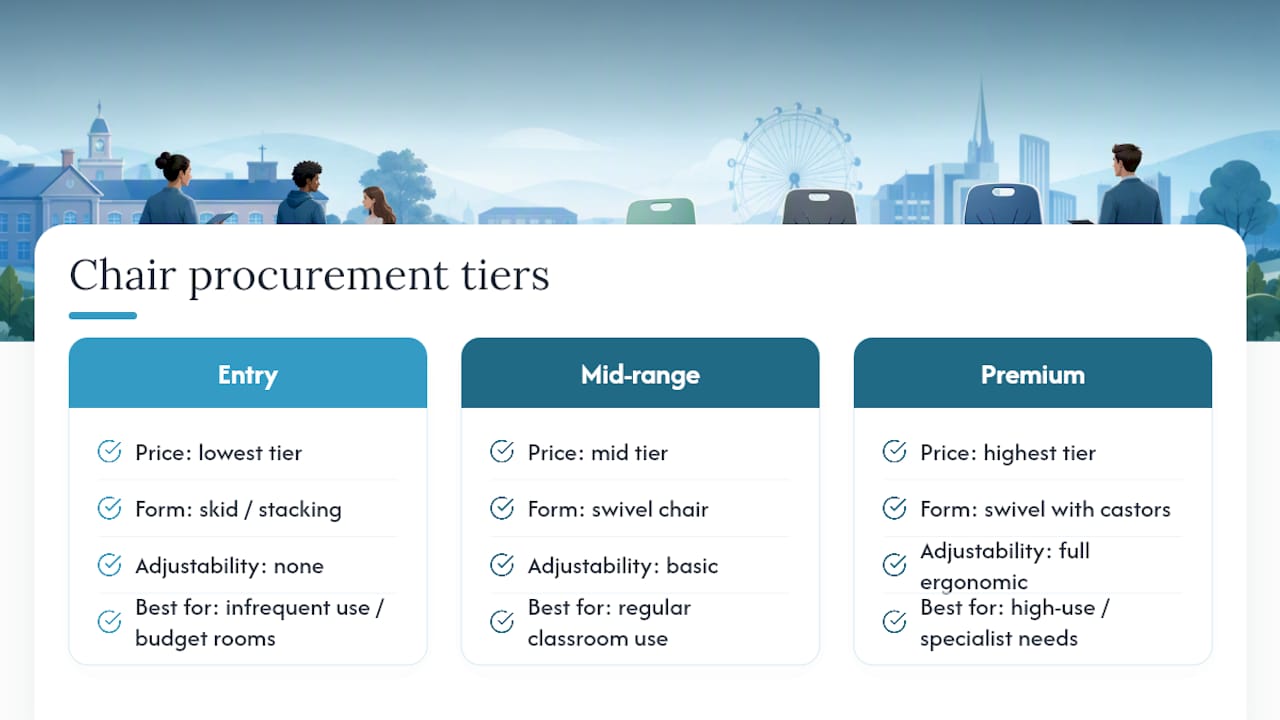
Per-seat pricing for classroom chairs typically spans three tiers: entry-level skid or stacking chairs at the lower end, mid-range swivel chairs with basic adjustability in the middle, and premium models with full ergonomic adjustment and castors at the top. Budget accordingly against how each room is actually used, rather than defaulting every space to the premium tier.
Volume matters. Larger orders across a school or multi-academy trust usually unlock better per-unit pricing, but lead times stretch during peak buying windows, particularly the summer holidays when most schools refit simultaneously. Build in extra weeks if you’re ordering for a September start.
Before signing off, check exactly what the warranty covers: parts, labour, or both, and whether replacement components (glides, castors, gas lifts) are stocked for quick turnaround rather than requiring a full chair swap. Ask whether delivery includes on-site installation, since unpacking and assembling several hundred chairs is a job schools rarely have spare staff time for.
How does the Titan range match these classroom requirements?
The Titan range is built around exactly the checklist above: age-appropriate sizing, durable materials and practical classroom features rather than office-chair extras pupils don’t need.
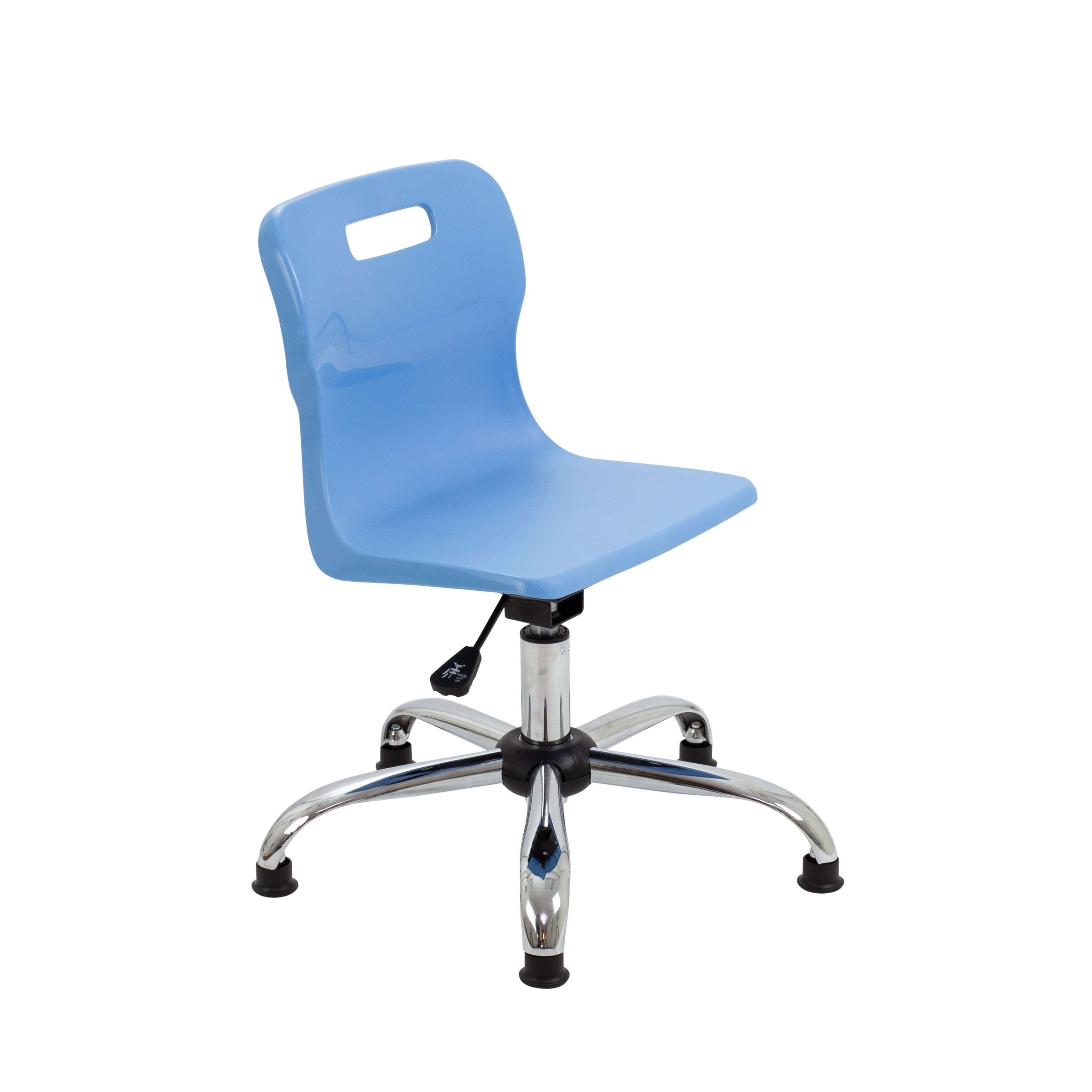
- Titan Swivel Junior Chair with Plastic Base and Glides: suited to early years and primary classrooms, with a plastic base and glides that keep movement quiet on hard floors and sizing that matches smaller pupils’ seat height needs.
- Titan Swivel Senior Chair with Plastic Base, Castors and D-Kit: fits secondary classrooms and general teaching spaces, with castors for easy repositioning between desk work and group activities, plus a D-Kit for added stability.
- Titan Skid Base Chair: a stackable, practical option for multi-use rooms, science labs, or halls where furniture gets moved and stored regularly.
Each model maps directly onto the adjustability, cleaning and durability criteria covered earlier, and Alxr backs the range as an NHS-approved supplier with warranty terms and delivery options designed for organisational, not individual, buyers. That NHS-approved status matters for schools too: it reflects the same quality bar applied to furniture destined for high-turnover healthcare environments, which face similar durability and cleaning demands to a busy classroom.
What do school furniture buyers get wrong most often?
Most procurement mistakes come from ordering one size for an entire year group instead of sizing per key stage. A single installation taught me that trial chairs with actual pupils before committing, and always keep a small spare stock ready for post-delivery swaps.
— Syed
How do you order the recommended Titan classroom chairs?
Getting the right chairs into classrooms shouldn’t mean weeks of back and forth over quotes and delivery windows. Volume procurement can be handled directly by the supplier, with a straightforward quote process for schools ordering across multiple year groups and full installation service so your team isn’t left assembling chairs after hours.
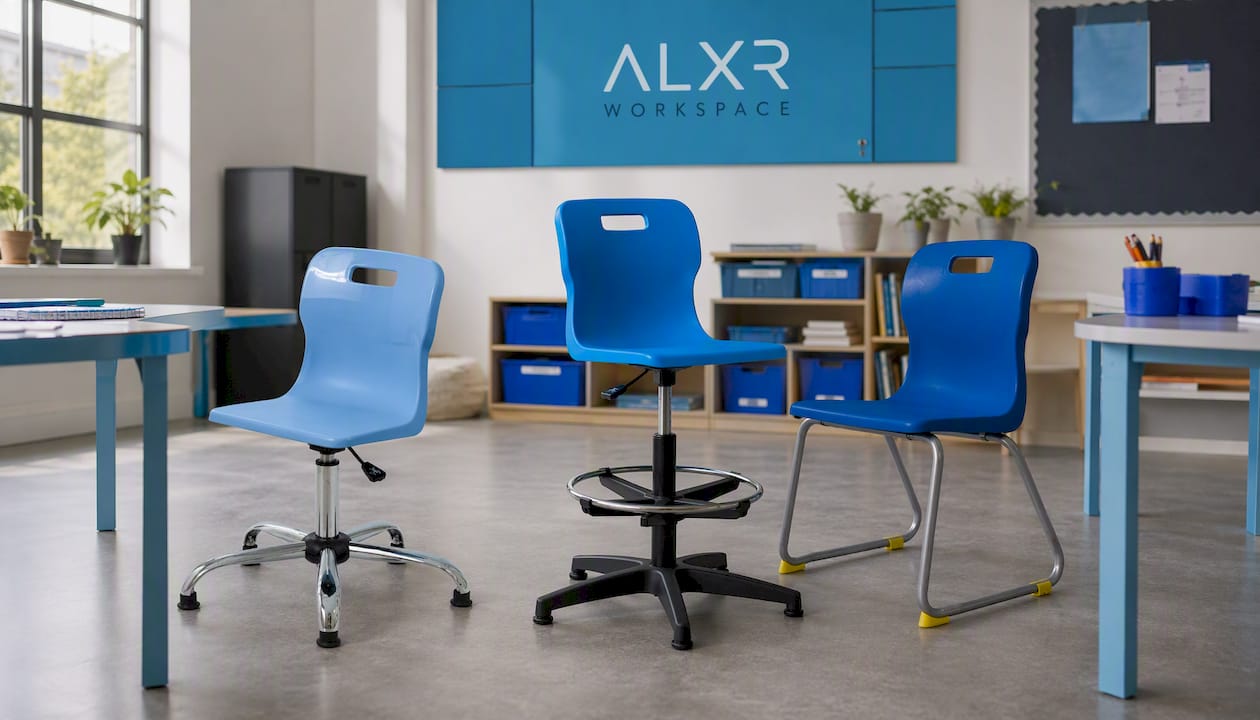
For early years and primary rooms, the Titan Swivel Junior Chair with Plastic Base and Glides covers smaller pupils without compromising on build quality. Secondary and general teaching spaces suit the Titan Swivel Senior Chair with Plastic Base, Castors and D-Kit, while multi-use rooms and halls are better served by the Titan Skid Base Chair for its stacking and stability. If you’re planning a wider refit, pairing chairs with height-adjustable desks such as the sit stand desk range is worth a conversation with the same team.
Warranty cover and replacement parts are confirmed at quote stage, so there are no surprises once chairs are on site. Request a volume quote through Alxr’s workspace catalogue and get delivery and installation timelines confirmed before you finalise your budget.
Where can you read more on classroom ergonomics research?
Consult HSE guidance and the linked ergonomics studies above when writing specifications.
Sources
- Health and Safety Executive (HSE)
- PubMed indexed ergonomics study (example)
- Ergonomics journal article DOI entry