

6–12 week lead times: procure ergonomic workstations for organizations
Delivering an ergonomic workstation setup at organisational scale means commissioning verified, adjustable sit-stand desks, compliant task seating, and a supplier that handles site survey, installation and warranty from one contract. The immediate next step is straightforward: commission a site survey and issue an RFP built around measurable specifications, referencing BIFMA/ANSI test standards rather than marketing claims. Suppliers exist precisely to fulfil that brief.
TL;DR:
- Specify exact, testable ranges for seat height, desk height, and noise levels, referencing certified standards like BIFMA/ANSI, to ensure ergonomic compliance.
- Include detailed documentation such as test reports, cycle life ratings, and materials, and verify certifications like UL GREENGUARD Gold before approving suppliers.
- Structure the RFP with measurable criteria, mock-up requirements, and clear delivery, installation, and warranty conditions to prevent vague responses and ensure quality.
- Conduct site surveys, verify room dimensions and outlet positions before delivery, and perform full-range functional tests on a sample to catch defects early.
- Focus on organizational procurement practices by creating enforceable specifications and mock-up evaluations rather than relying on employee comfort requests alone.
Table of Contents
- What specifications should you write into the desk and chair brief?
- How do you structure an RFP for workstation procurement?
- What does a smooth installation and acceptance process look like?
- How do you build the ROI case for senior stakeholders?
- How Alxr fulfils a workstation procurement brief
- How do you get staff actually using the new setup properly?
- How do you manage the shift to new workstations without disruption?
- Where to check specifications, standards and procurement models
- The procurement mindset most organisations get wrong
- Get your workstation programme specified and installed
- Sources
What specifications should you write into the desk and chair brief?
Ergonomic claims are cheap to print on a catalogue page and expensive to verify after 200 desks have already arrived on site. Procurement protects itself by writing exact, testable numbers into the specification, not adjectives.
Chairs should offer seat height adjustment within a functional ergonomic range, independent seat depth adjustment, adjustable lumbar support and 4D armrests that move up, down, forwards and back. Ask for the mechanism’s rated cycle life and the frame material, since a chair specified for a 24-hour care setting needs a different duty cycle to one for a nine-to-five office.
Desks need an electric sit-stand range that covers a seated to standing height range appropriate for ergonomic use, a stated lifting capacity, a stability rating under load, and a maximum noise level during transition. Background evidence supports these baseline ranges as the minimum functional requirement for genuine ergonomic benefit, not a nice-to-have upgrade tier.
- Seat height: 17 to 21 inches, seat depth adjustable, adjustable lumbar, 4D arms
- Desk travel: seated height near 25 inches to standing height near 50 inches
- Materials: FSC-certified timber where claimed, low-VOC or E1-equivalent finishes
- Durability: stated abrasion rating and upholstery rub count for seating fabric
- Documentation: BIFMA/ANSI test reports tied to the exact model number quoted
Statistic to hold suppliers to: buyer guides commonly find standard lead times run 6 to 12 weeks, with custom configurations taking longer. Any quote that promises faster delivery on bespoke items deserves scrutiny.
A common procurement pitfall is accepting catalogue photography or a general “ergonomic” label as proof of compliance. Insist the certification is checked against the BIFMA Compliant® registry entry for that specific model, plus a UL GREENGUARD Gold listing where indoor air quality matters, such as in healthcare or education settings.
Pro Tip: Request a pre-shipment photo set and one physical sample chair or desk before signing off full production. It costs a delivery slot; it saves a warehouse full of returns.
How do you structure an RFP for workstation procurement?
An RFP that lists “ergonomic chairs and desks” as a line item invites vague responses. Structure it so every bidder answers the same measurable questions, in the same format, against the same weighting.
- Project scope and workstation schedule — list roles (reception, clinical, open-plan desk-based, accessible workstation) against furniture type and quantity, following role-based profiling rather than a flat headcount.
- Mandatory technical specifications — the exact ranges and certifications from the previous section, marked non-negotiable.
- Desirable criteria — finish options, colour ranges, additional cable management, scored but not disqualifying.
- Sample or mock-up requirement — a physical unit built to spec, inspected before full manufacture.
- Delivery and installation plan — phasing, site access, and named installation crew.
- Warranty and spare-parts commitment — coverage length by component, not a blanket “5 year warranty” line.
- Acceptance testing procedure — how compliance is verified on delivery day.
- Pricing schedule and penalty clauses — late delivery, defect rectification timescales.
Weight your evaluation matrix so price never dominates alone:
- Technical compliance: 35%
- Lead time and delivery reliability: 20%
- Warranty and after-sales support: 20%
- Price and total cost of ownership: 15%
- References and comparable project experience: 10%
Ask suppliers directly: what are your lead times for standard versus custom items? What warranty applies to the gas lift, the electric motor, and the upholstery separately? What is your service level agreement for fixing an installation defect discovered after handover?
If the schedule includes accessible or specialist assistive workstations, build those requirements into the same RFP rather than running a separate tender. It keeps installation, warranty and support consistent across every desk on the floor.
What does a smooth installation and acceptance process look like?
Furniture that meets every specification on paper can still fail on installation day if the site was never properly surveyed. Before delivery, verify as-built room dimensions against the schedule, confirm door widths and lift capacities on the delivery route, and check power and data outlet positions match desk placement. Floor loading and HVAC vent clearance are important considerations, especially in areas with dense sit-stand desk arrangements.
Plan logistics around the building, not the other way round: staged deliveries, protective flooring during transit, and a coordinated slot with any contractors or IT teams already on site. A physical mock-up before full manufacture remains the single most reliable way to catch a clearance or usability problem before it multiplies across 50 identical desks.
On delivery, run acceptance tests rather than a visual walk-through alone. Cycle each sit-stand desk through its full height range several times, check chair mechanisms operate smoothly under load, and inspect finishes against the sample approved earlier. Testing a representative sample rate, not just the first unit off the van, catches batch-level defects.
- Confirm door, lift and corridor widths against desk dimensions before delivery day
- Check power, data and HVAC positions match the workstation schedule
- Run full-range cycle tests on a sample of desks and chairs, not just one unit
- Log every defect on a single punch-list document with a rectification deadline
Close the project with asset tagging, recording model number, serial number and warranty start date against each item, and a spare-parts list held on file. Staff orientation on adjusting their own desk and chair should happen before the punch-list is signed off, not weeks later.
Pro Tip: Photograph the punch-list items on-site and timestamp them. A dated photo settles a dispute over “was this damaged in transit or on arrival?” far faster than an email chain.
How do you build the ROI case for senior stakeholders?
Total cost of ownership rarely stops at the purchase order. Line items to model include product cost, delivery and installation, projected downtime during rollout, ongoing maintenance, spare parts, and disposal or recycling of the furniture being replaced.
A conservative ROI case doesn’t need dramatic projections. Model a modest reduction in absenteeism linked to musculoskeletal discomfort, factor in the avoided cost of a single injury claim, and weigh that against extended product lifespan and salvage value at end of life. Even cautious assumptions tend to make the case, because a well-specified desk and chair combination lasts considerably longer than a budget alternative replaced every few years.
- Product cost, delivery and installation as one combined figure, not separate quotes
- Maintenance call-rate and spare-parts spend tracked over the warranty period
- Disposal or recycling cost for outgoing furniture, often overlooked in first-year budgets
- Structural frame and mechanism warranties, since these reduce mid-life replacement risk
Track a handful of KPIs after installation rather than assuming success: user satisfaction scores, the rate of maintenance call-outs, the volume of workstation-related complaints logged with facilities, and actual utilisation of sit-stand desks (a desk left permanently in the seated position is a wasted specification). Environmental factors matter too. Air quality monitoring alongside furniture upgrades gives a fuller picture of what’s actually driving comfort and productivity gains, rather than crediting furniture alone.
How Alxr fulfils a workstation procurement brief
Some suppliers offer nationwide delivery and installation, which matters when a tender spans multiple sites or a healthcare estate with strict compliance expectations. The catalogue runs into the thousands of products, so role-based schedules can be built from one supplier rather than stitched together across several.
Three configurations map cleanly onto common workstation roles in an RFP schedule:
| Product | Typical role in a workstation schedule |
|---|---|
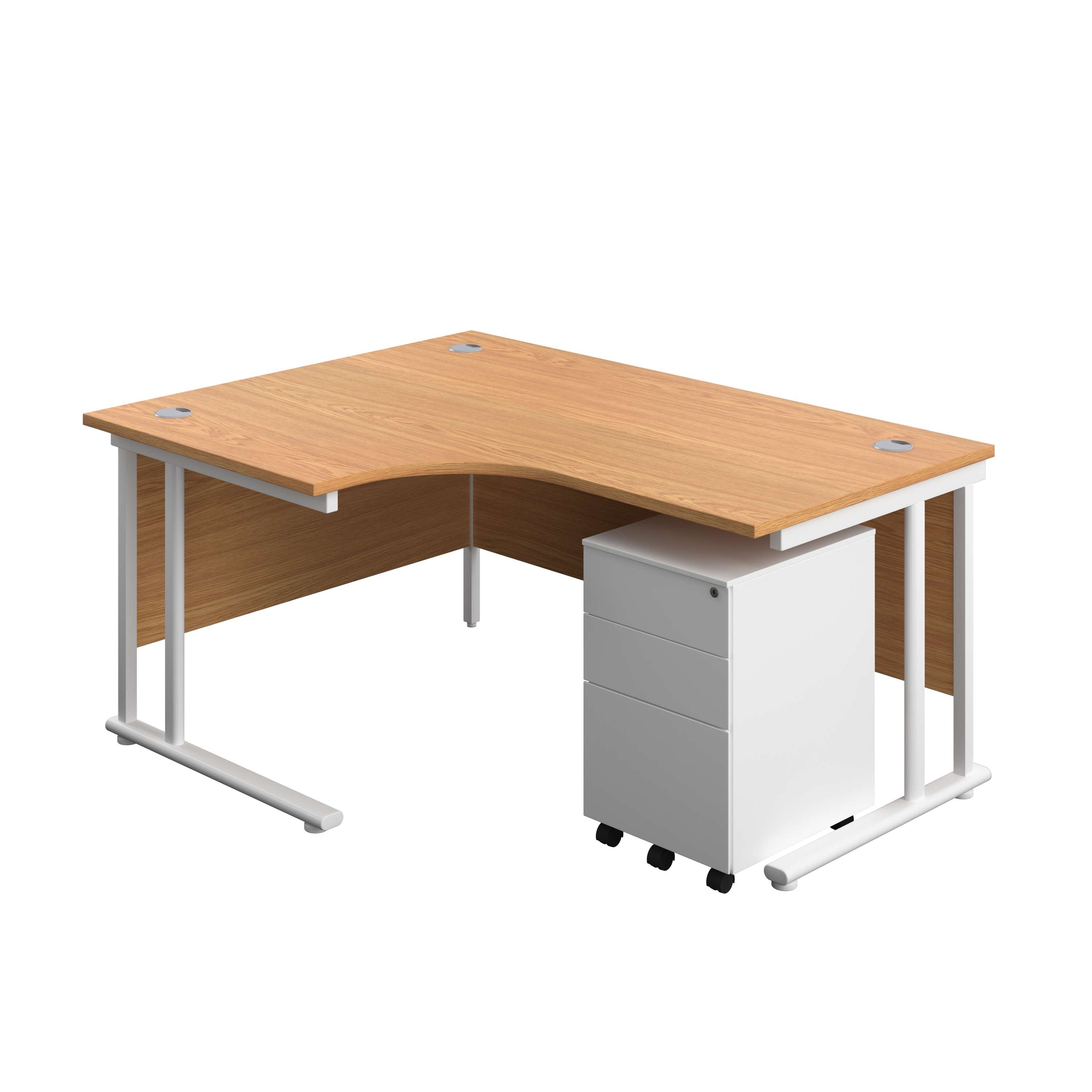
| Twin Upright Left Hand Radial Desk (FSC) | Paired or radial layouts where two staff share a corner configuration |
| Twin Upright Right Hand Radial Desk (FSC) | Mirrored layouts opposite a left-hand unit for symmetrical bays |
| Twin Upright Left Hand Radial Desk + Under Desk Steel Pedestal 3 Drawers (FSC) | Radial desks needing integrated lockable storage without extra floor footprint |
When drafting an RFP, request site surveys, mock-up units, dedicated installation crews, asset tagging on handover, warranty registration and after-sales support as standard scope items rather than add-ons. You don’t need to name or rank other suppliers in the document. Simply state the mandatory specifications and let compliant bidders, including Alxr, respond against them.
How do you get staff actually using the new setup properly?
A desk with a full electric height range delivers nothing if nobody adjusts it. Training has to happen close to installation, not as a follow-up email three weeks later that half the building ignores.
The most effective approach is a short, in-person session at the workstation itself, run in small groups on install day or the day after. Show staff how to set seat height so feet sit flat, how to adjust lumbar depth, and how to move between sitting and standing without defaulting back to the old fixed-height habit within a fortnight. Written guides help as a reference, but they rarely change behaviour on their own.
Nominate a handful of “super users” per floor, staff who learned the adjustments thoroughly and can answer quick questions without a facilities ticket. This matters more in mixed environments, healthcare wards or open-plan offices with shift patterns, where not everyone attends the same orientation slot.
Build a simple feedback loop for the first eight weeks: a short survey or a facilities inbox specifically for workstation queries, reviewed weekly rather than left to accumulate. Early friction, a chair that won’t hold its height setting, a desk motor running slower than expected, needs fixing fast, or staff quietly stop adjusting the furniture at all and the ergonomic investment sits unused.
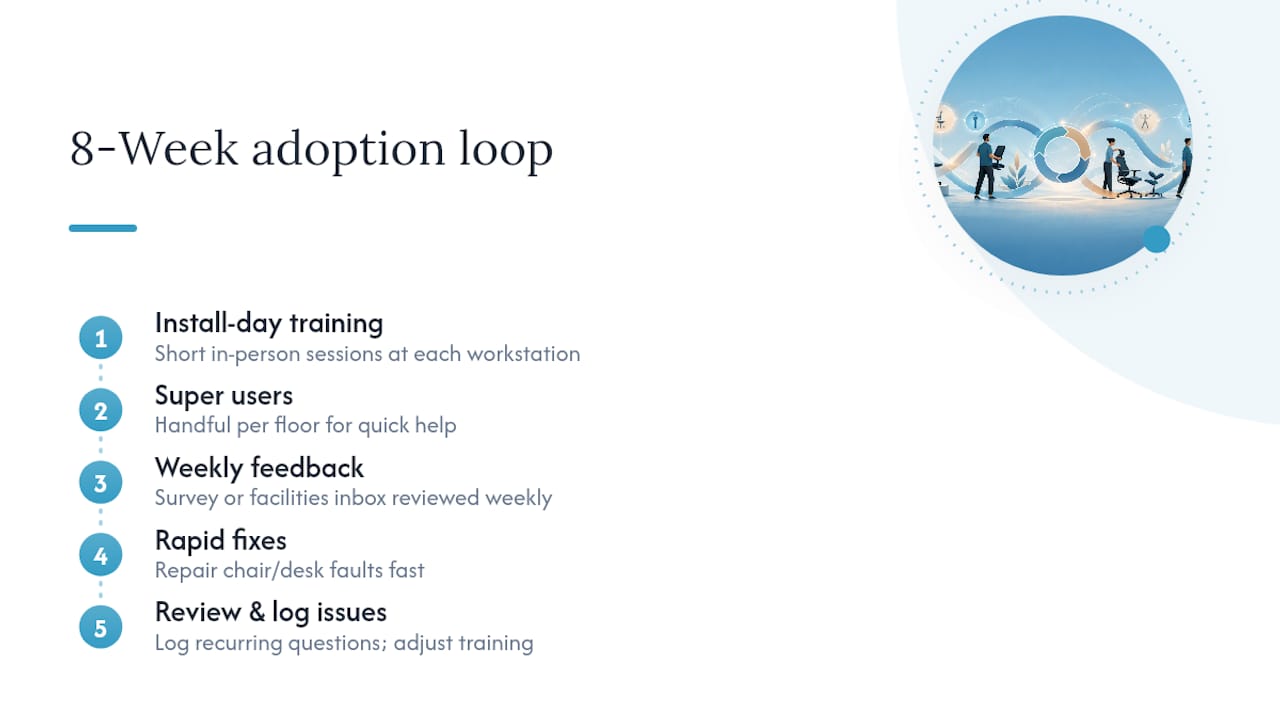
Log recurring questions. If several people ask the same thing about lumbar adjustment, that’s a sign the initial training pitched it wrong, not that staff are being difficult.
How do you manage the shift to new workstations without disruption?
Rolling out new furniture across a department is a change management exercise as much as a logistics one. Staff who have used the same desk for years, adjustable or not, often resist the switch even when the new setup is objectively better for them.
Communicate the reasoning early, ideally before delivery vans arrive. Explain what’s changing, why, and what stays the same, particularly personal storage and desk allocation, since uncertainty about losing “their spot” generates more resistance than the furniture change itself.
Phase the rollout where the floor plan allows it. Moving one team or one floor at a time, rather than the whole building overnight, gives facilities a chance to fix issues on a small scale before they multiply. It also means staff can see colleagues already using the new desks successfully, which does more to build confidence than any memo.
Give people a channel to raise concerns before they become complaints. A dedicated point of contact, whether that’s a facilities lead or a project manager named in the rollout communication, matters more than a generic email address nobody checks.
Expect a settling-in period of several weeks before usage patterns stabilise. Desks left in the seated position for the first fortnight aren’t necessarily a failed rollout; they’re often just staff who haven’t yet built the habit. Revisit utilisation data at 60 and 90 days rather than judging adoption in week one.
Where to check specifications, standards and procurement models
For model-specific compliance, check the BIFMA/ANSI test standards referenced against the exact SKU. For faster public-sector or education procurement, cooperative purchasing frameworks can shorten timelines using pre-agreed contracts. A structured buyer checklist covers role-based schedules and mock-up testing in more depth.
The procurement mindset most organisations get wrong
Most guidance on this topic still treats ergonomic furniture as an individual comfort decision, something an employee requests when their back starts hurting. That framing fails completely at organisational scale. A workstation programme covering 300 desks isn’t a series of personal preferences; it’s a capital project with specifications, acceptance criteria and a warranty schedule, and it should be run that way from the first site survey.
The conventional advice, adjust your chair, raise your monitor, take standing breaks, isn’t wrong for an individual. It’s simply the wrong lesson for the person holding the budget. What procurement needs is enforceable language: exact seat height ranges, documented cycle-life ratings, model-specific test reports. Skip that step and you’re buying on trust in a brochure, which is precisely the gap that leads to mismatched furniture arriving on install day.
Prioritise the RFP and the mock-up over everything else. A well-worded specification with weak installation support still causes fewer problems than confident installation logistics built on a vague spec. Get the paperwork rigorous first. Everything downstream, delivery, training, adoption, gets considerably easier once the furniture itself was never in question.
— Syed
Get your workstation programme specified and installed
Alxr removes the guesswork from sourcing at scale. Instead of chasing multiple vendors for chairs, desks, storage and installation separately, you can choose one supplier handling the full schedule, with nationwide delivery and installation built into the process rather than bolted on afterwards.
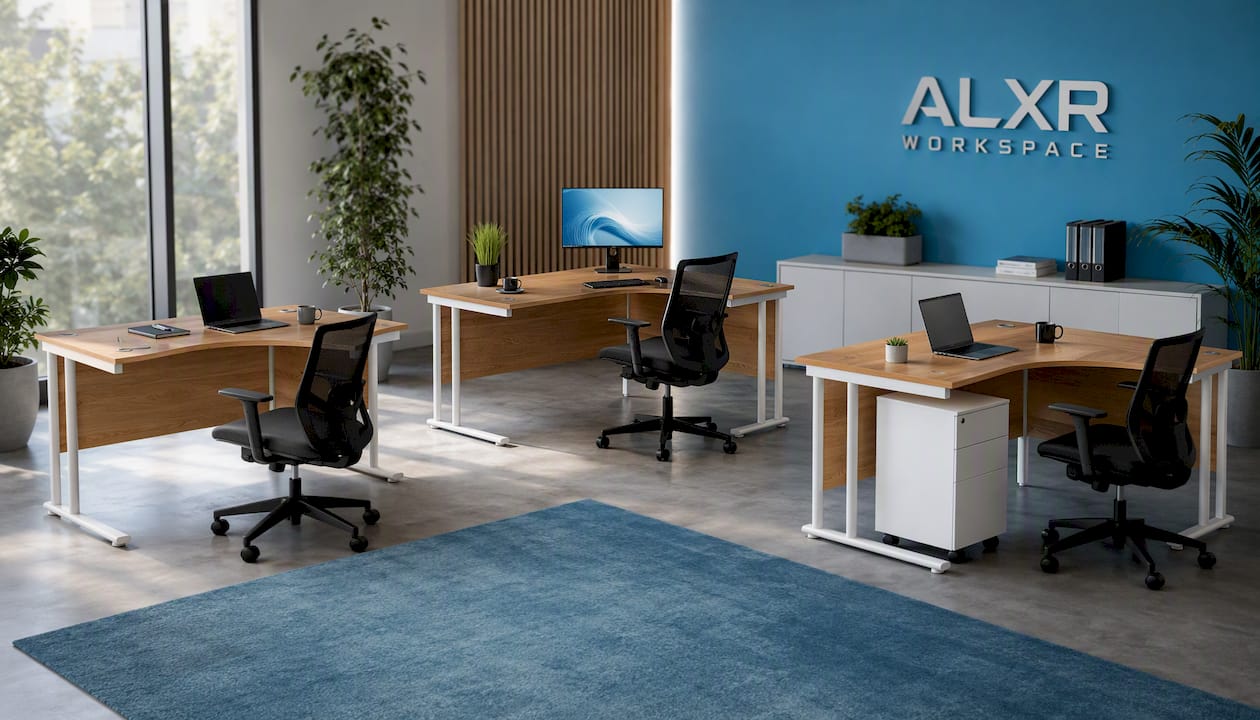
Catalogues often cover multiple environments, so a mixed estate, a school alongside an admin block, or a clinic beside back-office space, can sometimes be specified from a single source rather than multiple contracts. Various task chairs, sit-stand desks, and workstation configurations with integrated storage may be available with documentation to support procurement needs for sign-off. Alxr’s dual-motor sit-stand desk and ergonomic task chair give a useful starting reference for building your RFP schedule.
Start by requesting a site survey and a sample quote for your workstation schedule, and use it as the benchmark for any RFP you issue.