

Sitting 6+ Hours? Mesh vs Upholstered Chairs for Long Shifts
For long hours at a desk in a warm office, mesh usually wins on comfort. For a plush, cushioned feel in a cooler room or a client-facing space, upholstered seating tends to serve you better. The real trade-off is breathability against cushioned warmth, and ALXR’s furniture specialists see this decision play out daily across offices, clinics, and schools.
TL;DR:
- Mesh chairs are better suited for long hours in warm conditions due to superior breathability and dynamic support, but require tension maintenance to prevent sagging.
- Upholstered chairs offer a wider range of styles and fabrics, with foam comfort that tends to compress over time, making them more suitable for shorter, formal use.
- Ease of maintenance favors mesh, which is simpler to wipe clean, while fabric absorbs spills and odors, needing more careful cleaning and possibly protective treatments.
- For durability, mesh tension can loosen and sag within years, whereas foam compression and fabric wear are common with upholstered options, affecting long-term comfort.
- Mechanism quality and adjustability have a greater impact on ergonomic support than the cover material, making mechanical features the priority in chair selection.
Table of Contents
- Mesh vs upholstered chairs: a quick side-by-side comparison
- What mesh is and how it affects support and temperature
- What upholstered seating is and how foam and cover change the feel
- Breathability and temperature: when airflow matters most
- Comfort and ergonomics: support, posture, and long-hour use
- Durability and ageing: what to expect over one to five years
- Cleaning and maintenance: keeping chairs usable and looking good
- Cost and value: where to spend your budget
- How to choose: a checklist for testing chairs before you buy
- ALXR’s approach to matching material to how you actually work
- Do mesh chairs creak and are upholstered chairs quieter?
- Author’s quick buying rubric
- Ready to choose your next chair? Here’s where to start
- Sources
Mesh vs upholstered chairs: a quick side-by-side comparison
Before you dig into the detail, here’s how the two materials stack up across the factors that matter most when you’re choosing office seating.
- Breathability: Mesh allows air to pass through the backrest constantly; upholstered fabric traps warmth against your back.
- Feel: Mesh gives a firmer, more supportive sensation with slight give; upholstered foam offers a softer, cushioned sit.
- Ergonomic support: Mesh contours to your spine dynamically; upholstered chairs rely on foam shaping and internal padding to distribute pressure.
- Maintenance: Mesh wipes clean and dries quickly; upholstered fabric absorbs spills and often needs specialist cleaning.
- Durability: Mesh can lose tension over years of use; upholstered foam compresses and fabric can pill or fray.
- Price: Entry-level mesh chairs tend to cost less than equivalent upholstered chairs, though prices vary widely depending on mechanism quality.
Who benefits most from each? If you spend long hours at a desk, especially in warmer conditions, mesh chair back support tends to outperform fabric. If you’re furnishing a reception area, boardroom, or a home office where you sit for shorter stretches and want a softer, more formal look, upholstered chair comfort usually matters more than airflow. Neither material guarantees quality on its own. A cheap mesh chair with a poor mechanism will disappoint just as quickly as a badly padded fabric one, which is why the frame, mechanism, and adjustability behind either material determine long-term comfort more than the cover material itself.
What mesh is and how it affects support and temperature
Mesh seating uses a taut woven fabric, typically a polyester or nylon blend, stretched across a frame instead of a padded foam panel. That tension is what creates dynamic support: as you shift or lean back, the mesh flexes and pushes back against your spine rather than compressing flat like foam.
The catch is that this support depends entirely on the mesh staying properly tensioned. When cheaper mesh loses its tautness over time, it starts to sag in the middle, creating what’s often called a hammock effect that undermines the very support the material was designed to provide. If you’re testing a mesh chair before buying, press firmly on the centre of the backrest. It should push back evenly rather than stretch loosely. Check the edge finish too, since fraying or loose stitching at the mesh border is often the first sign of a shorter lifespan. Many mesh chairs pair the back with a foam-padded seat base, so consider both the seat and back materials when choosing.
What upholstered seating is and how foam and cover change the feel
Upholstered chairs build comfort from the inside out: a shaped foam core wrapped in fabric, faux leather, or genuine leather. Unlike mesh, there’s no tension system doing the work. Everything depends on the density and thickness of the foam beneath the cover.
Higher-density foam holds its shape under repeated sitting and distributes your weight more evenly across the seat pan and backrest. Thinner or low-density foam feels comfortable in a showroom but compresses within months, and that compression is one of the clearest predictors of how long an upholstered chair will stay comfortable. Fabric type matters too, not just for comfort but for the room’s appearance. Upholstery gives you a far wider palette than mesh: tweed and wool-mix fabrics for a warm, residential feel, faux leather for a sleeker boardroom look, and dozens of colourways that simply aren’t available on a mesh panel. For anyone weighing mesh vs fabric office chair options on looks alone, upholstery generally has the edge.
Breathability and temperature: when airflow matters most
Heat build-up is the single biggest complaint about upholstered chairs during long sitting sessions, and it’s backed by evidence rather than just anecdote. Breathable mesh seating reduces heat build-up and perceived discomfort compared with solid upholstered backs, largely because air can move continuously through the weave instead of getting trapped against a padded surface.
Statistic callout: Studies on seating materials consistently find mesh backs reduce perceived heat and discomfort during extended sitting, making airflow one of the most measurable differences between the two materials.
That advantage matters most in warm offices, open-plan spaces with poor air conditioning, or for anyone who sits for six-plus hours without much movement. It matters far less in a cool room, a chair used for short meetings, or a lounge setting where the priority is a soft, settled feel rather than airflow. This is also where hybrid designs earn their keep: combining a mesh back with a padded seat gives you cooling where your body generates the most heat while still cushioning the seat pan.
Pro Tip: If your office has hot afternoons and mixed occupancy, mesh backs give you a safer baseline. Fewer people complain about overheating than about a chair being slightly firmer than they’d like.
Comfort and ergonomics: support, posture, and long-hour use
Here’s the point worth repeating until it sticks: the mechanism underneath a chair usually matters more for your posture than whether the cover is mesh or fabric. Both materials can deliver strong or weak ergonomic support depending on the build quality behind them, not the label on the spec sheet.
Mesh contours to your spine through tension, flexing dynamically as you move and adjusting slightly with every shift in posture. Upholstered foam works differently, distributing pressure through shaping rather than movement, which can feel more stable if you tend to sit still for long stretches. Neither approach is universally superior for back support; it depends on how you sit and for how long.
What genuinely separates a good chair from a mediocre one, regardless of material, is the adjustability built into the frame:
- Lumbar support that adjusts in height and depth, not a fixed curve moulded into the backrest.
- Seat depth adjustment, so the cushion doesn’t dig into the back of your knees.
- Seat height and tilt tension control, matched to your desk height.
- Armrest height and width, ideally independently adjustable.
- Recline lock with multiple positions rather than a single fixed angle.
If you’re choosing between mesh vs upholstered chairs purely on cover material and skipping these mechanical checks, you’re solving the wrong problem.
Durability and ageing: what to expect over one to five years
Both materials age, just in different ways. Mesh degrades through tension loss: the weave stretches slightly with years of use, and once it sags, there’s no way to retighten it the way you might replace foam or re-upholster a seat. Watch for a mesh back that already feels loose in the showroom; it will only get worse.
Upholstered chairs age through foam compression and fabric wear, which can lead to reduced comfort and visible wear after extended use.
Before buying either type, ask two questions: is the mesh or the foam a replaceable part, and what does the frame warranty actually cover? A five-year mechanism warranty with no coverage on the seat pad tells you the manufacturer expects that component to wear out. Treat a mesh panel that already looks stretched, or foam that dents and stays dented, as a red flag at the point of purchase, not just after months of use.
Cleaning and maintenance: keeping chairs usable and looking good
Maintenance is where the two materials diverge most in daily practicality. Mesh wipes down easily and dries almost immediately after cleaning, while upholstered fabric can trap spills, odours, and dust far more stubbornly.
- Wipe mesh weekly with a damp cloth and mild detergent; avoid soaking, which can loosen the weave’s tension over time.
- Vacuum upholstered fabric every one to two weeks to lift dust and grit before it works into the fibres.
- Blot fabric spills immediately rather than rubbing, and use a fabric-safe cleaner rather than an all-purpose spray.
- Check screws and gas cylinders every six months regardless of material, since mechanical wear happens independently of the cover.
Pro Tip: Odour tends to linger in upholstered fabric far longer than most people expect, especially in shared offices. A fabric protector spray applied at purchase makes a genuine difference to long-term upkeep.
Cost and value: where to spend your budget
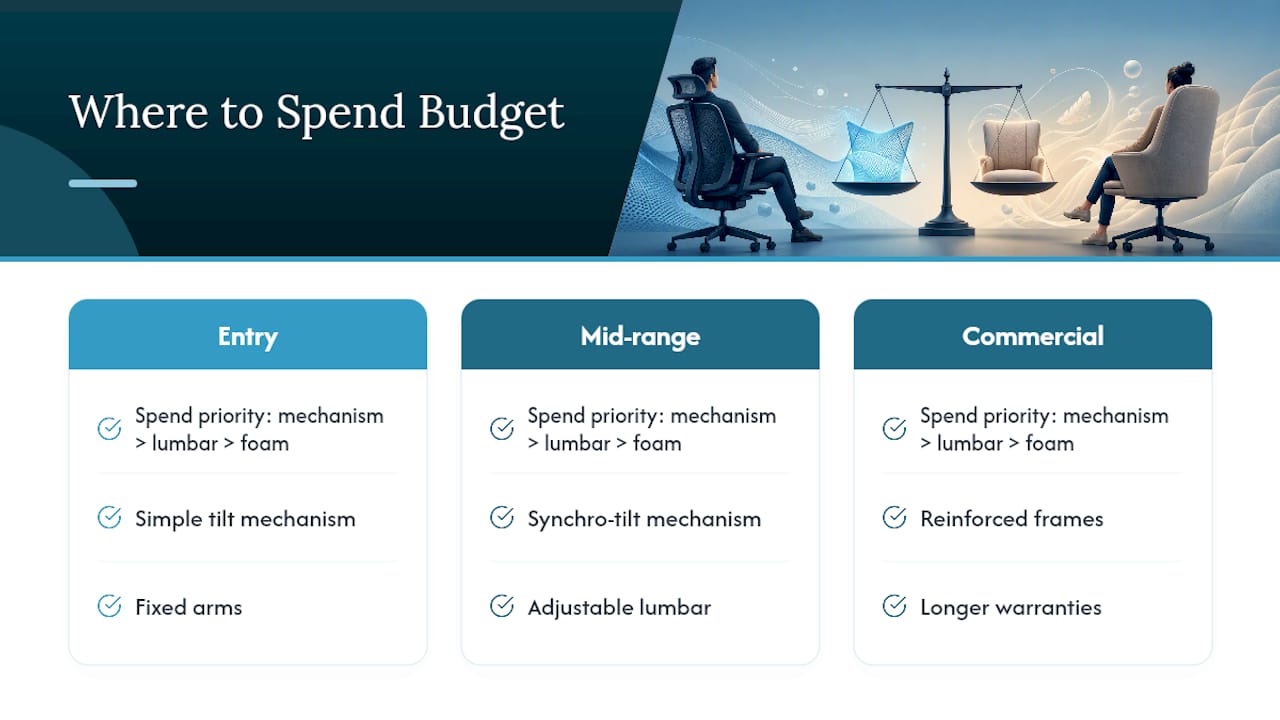
Material alone doesn’t set the price; the mechanism behind it usually does. A basic mesh chair with a simple tilt mechanism can cost less than a mid-range fabric chair with a proper synchro-tilt and adjustable lumbar, so don’t assume mesh vs fabric seating pricing follows a fixed pattern.
Spend first on the mechanism, adjustable lumbar support, and foam quality in the seat pan, since these three elements affect comfort daily regardless of cover material. At entry level, expect basic tilt and fixed arms. Mid-range models add synchro-tilt and adjustable lumbar. Commercial-grade chairs, the kind found in healthcare and education settings, add reinforced frames and longer warranties to withstand heavier daily use.
How to choose: a checklist for testing chairs before you buy
Turn everything above into a practical test. Before committing to either material, work through this checklist in showroom or with a supplier:
- Sit in the chair for at least ten minutes, not thirty seconds; tension and foam feel different once your body settles.
- Push firmly on the mesh backrest or press into the upholstered seat to check for sag or bottoming out.
- Adjust the lumbar support through its full range; it should move, not just exist as a fixed bump.
- Test the tilt tension and recline lock at your actual working posture, not upright in a showroom.
- Ask what the seat pad or mesh panel is made from and whether it’s replaceable separately from the frame.
Then take these questions to any supplier before you order:
- What does the warranty cover on the frame versus the seat pad or mesh panel?
- Is the mesh a branded, tension-rated product or a generic weave?
- What’s the foam density in the seat, and is it high-resilience foam or standard polyurethane?
- How quickly can replacement parts be sourced if something wears out?
Walk away if a supplier can’t answer basic questions about foam density or mesh specification, or if the warranty excludes the seat pad entirely. That’s usually a sign the chair wasn’t built for daily use in the first place.
ALXR’s approach to matching material to how you actually work
Ergonomic office furniture suppliers often provide products for commercial, healthcare, and education settings, with some holding NHS-approved supplier status, leading to thorough specification scrutiny.
For desks used all day in warmer offices, the Vision Mesh Office Chair gives the airflow and dynamic back support this guide recommends. For agile, multi-user spaces where chairs move between desks and meeting rooms, the Zip Mesh Back Chair with Folding Arms adds practical flexibility without sacrificing breathability. For reception areas or boardrooms where a softer, more formal look matters, the Tub Armchair with Metal Feet delivers the cushioned comfort upholstery does best.
If you’re unsure which fits your space, consider asking a workplace furniture supplier for a workplace assessment or a quote before you commit.
Do mesh chairs creak and are upholstered chairs quieter?
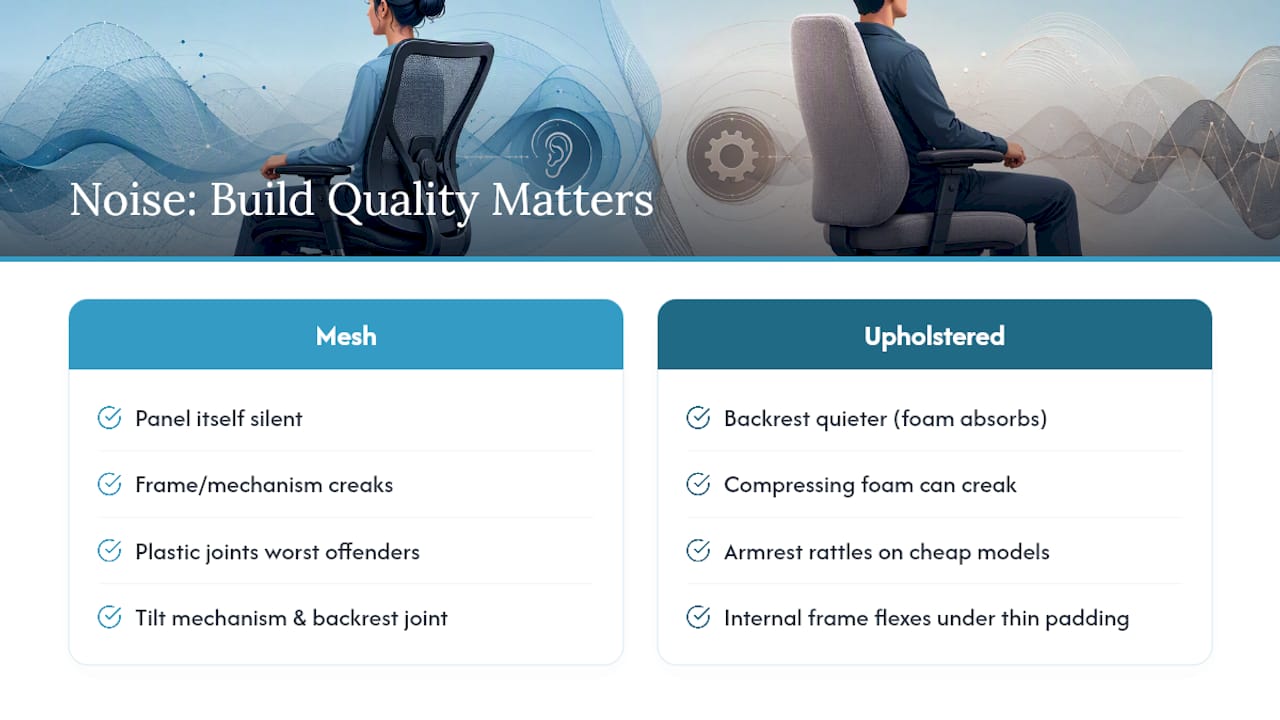
Noise is one of the most overlooked differences between these two materials, and it catches a lot of buyers off guard after a few months of use. Mesh panels themselves are silent since there’s no foam or padding to shift, but the frame and mechanism underneath can develop creaks as fixings loosen with repeated tilting and swivelling. Cheaper mesh chairs with plastic joints are usually the worst offenders, particularly around the tilt mechanism and the point where the mesh backrest connects to the frame.
Upholstered chairs tend to be quieter in the backrest itself, since foam and fabric absorb movement rather than transmitting it, but they’re not immune to noise either. Foam that’s started to compress can produce a faint creak as the internal frame flexes underneath thinning padding, and armrests on cheaper upholstered models often develop a rattle well before the fabric shows any visible wear.
The honest answer is that noise says more about build quality than material choice. A well-built mesh chair with metal fixings and a quality gas cylinder will stay silent for years, while a poorly assembled upholstered chair can start creaking within months. If noise is a genuine concern, test the tilt and recline mechanisms in the showroom rather than assuming the cover material will decide it for you.
Author’s quick buying rubric
Here’s the practical shortcut: if you’re sitting for six or more hours a day in a room that gets warm, buy mesh chair back support without overthinking it. If you’re furnishing reception, a boardroom, or anywhere formality and softness outrank temperature, buy upholstered.
A home worker at a desk from 9 to 5 in a converted spare room should default to mesh. A receptionist greeting visitors for short stretches, or a boardroom used for two-hour meetings, suits upholstered far better. When in doubt, check the mechanism before the material; that decision matters more than either fabric or mesh alone.
— Syed
Ready to choose your next chair? Here’s where to start
Showrooms and generic retailers will happily sell you either material without asking how you actually work. Some suppliers aim to match chairs to the room, usage hours, and individual users. They may offer products meeting NHS-approved build standards, along with delivery and installation services.
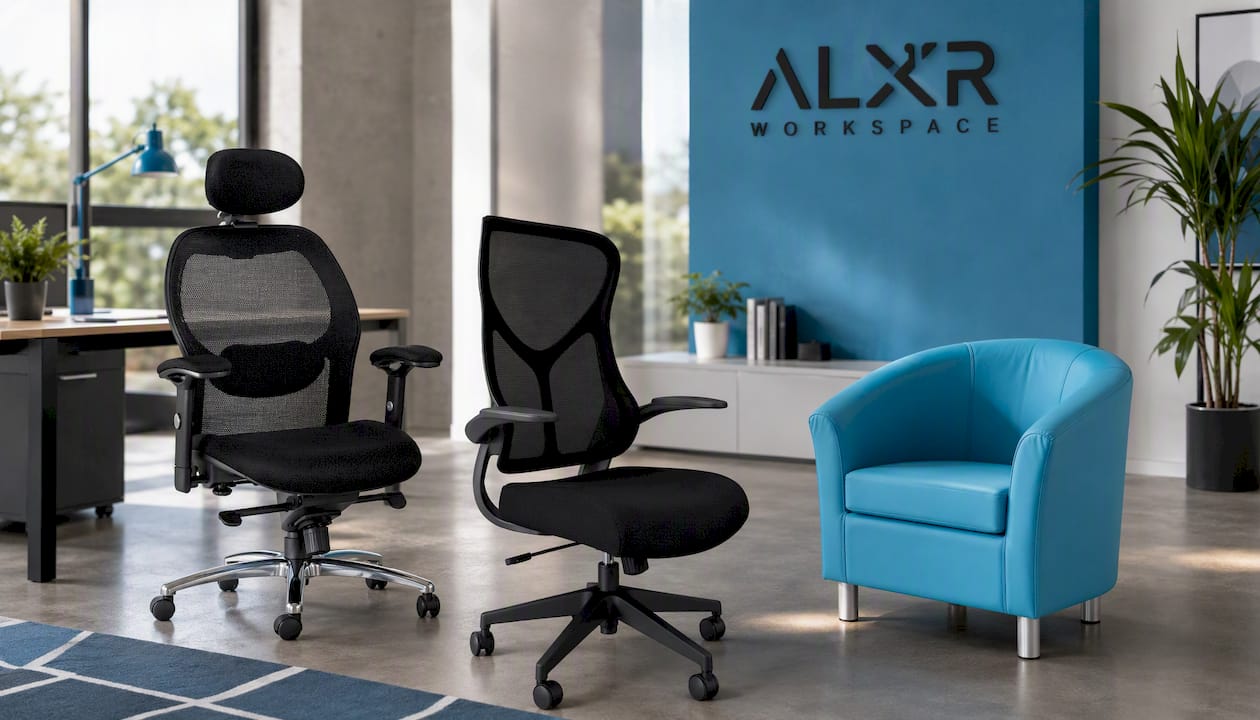
If long hours in a warm office are your reality, the Vision Mesh Office Chair gives you the breathable support this guide recommends. Need flexibility across shared desks or agile layouts? The Zip Mesh Back Chair with Folding Arms folds neatly into multi-use spaces. Furnishing a reception area or boardroom where a cushioned, formal look matters more than airflow? The Tub Armchair with Metal Feet covers that brief properly. Browse the full range or request a workplace assessment to get a recommendation matched to your actual space, not a generic best-seller list.
Sources
- Mesh vs upholstered office chairs: which is right for you? | Buro AU
- Mesh vs Fabric Chair: Which is Best for You? (2026) | Chair Insights