

Save 84–116 Minutes: Sit-Stand vs Fixed Desk and What to Order
For most people who will genuinely alternate between sitting and standing, a sit-stand desk is the better default, because it measurably cuts sitting time when paired with proper habit change and workplace promotion. A fixed desk still wins on cost, simplicity, and stability where budgets are tight or space is shared. The right answer depends less on the desk and more on what you’ll actually do with it, which the sections below unpack in full.
TL;DR:
- Sit-stand desks can reduce sitting time by about 84 to 116 minutes per day in the short term, but long-term health benefits remain unproven.
- Fixed desks are more cost-effective, stable, and require no user habit change, making them suitable for roles with minimal task variation.
- Choosing the right desk depends on user activity, workspace permanence, and whether stability or adjustability is more important for your team.
- Proper trial, training, and routine promotion are crucial for ensuring long-term habit adoption of sit-stand desks.
- Employers are not legally required to provide sit-stand desks but should facilitate regular movement and posture variation through work routines.
Table of Contents
- Sit stand vs fixed desk: what the evidence and practice actually say
- How do you choose between sit-stand and fixed desks?
- What should you check before ordering and installing a desk?
- Making the habit stick: breaks, posture, and your legal duties
- What real users say about switching desk types
- What I’d actually recommend if you’re deciding now
- How Alxr can help you fit out the right workspace
- Sources
- FAQ
Sit stand vs fixed desk: what the evidence and practice actually say
Height-adjustable desks do change behaviour. That much is settled. What’s far less settled is whether that behaviour change translates into the health outcomes most buyers assume they’re paying for.
Cochrane’s review of workplace sitting interventions found sit-stand desks cut workplace sitting by a meaningful amount a day in the short term. That’s a genuine, measurable shift in daily behaviour. But Cochrane also rated the underlying evidence as low to very low quality, and found insufficient proof that this translates into long-term health benefits like reduced cardiovascular risk or improved metabolic markers. A 2024 systematic review reached a similar conclusion: sedentary time drops in the short and medium term, but what happens over years remains genuinely uncertain.
Sit-stand desks reduce sitting by a substantial amount per day in the short term, according to Cochrane, yet the evidence for lasting health gains stays weak. That gap between “changes behaviour” and “proven long-term benefit” is the single most important thing to understand before you buy.
Standing itself isn’t some wellness cure either. Standing all day brings its own problems, including joint strain and fatigue, and burns only a marginal number of extra calories over sitting according to Harvard Health’s review of standing desk claims. Cochrane’s separate review of musculoskeletal outcomes found insufficient evidence that a sit-stand desk alone reduces the intensity of low back or upper back pain. Productivity claims are similarly mixed: some users report sharper focus while standing, others report the opposite, and the research doesn’t land cleanly on either side.
None of this means the desk doesn’t matter. It means the desk is a tool, not a treatment.
Where fixed desks still win:
- Lower upfront cost and no motors or electronics to maintain
- Rock-solid stability under monitors, dual screens, or drafting work
- Zero habit dependence. The desk does nothing, so it can’t be misused
- Faster to source and install at scale across an office
Where sit-stand desks earn their premium:
- Built-in prompt to move, which fixed desks simply can’t offer
- Genuine short-term reduction in total sitting time
- Useful for staff with existing back, neck, or circulation concerns
- Supports a wider range of tasks (standing calls, quick reviews, collaborative huddles)
How do you choose between sit-stand and fixed desks?
Decision-making here comes down to three questions: who’s using it, how permanent the workspace is, and what happens after delivery day.
- Match the desk to the user profile. Someone doing four hours of focused design work benefits less from standing than someone who’s on calls, reviewing documents, or switching tasks frequently through the day. Roles with genuine task variety get more out of a sit-stand desk because there’s a natural reason to change posture.
- Weigh converters against full desks honestly. A desk-top converter is a reasonable entry point for hot-desking environments or rented offices, since it needs no installation and travels with the user. But converters compromise stability and durability compared with a full-height desk, and they eat desk surface area, which matters for anyone running two monitors.
- Check the frame, not just the motor spec. For heavy daily use, crossbar-stabilised frames or dual-motor systems outperform single-motor, non-stabilised designs, which tend to wobble under load. If your team will lean on the desk, adjust it several times a day, or mount heavier monitor arms, frame rigidity matters more than the top-line lift speed.
- Factor in warranty and installation, not just sticker price. A desk that’s cheaper to buy but harder to service across 40 desks in three buildings often costs more over its working life.
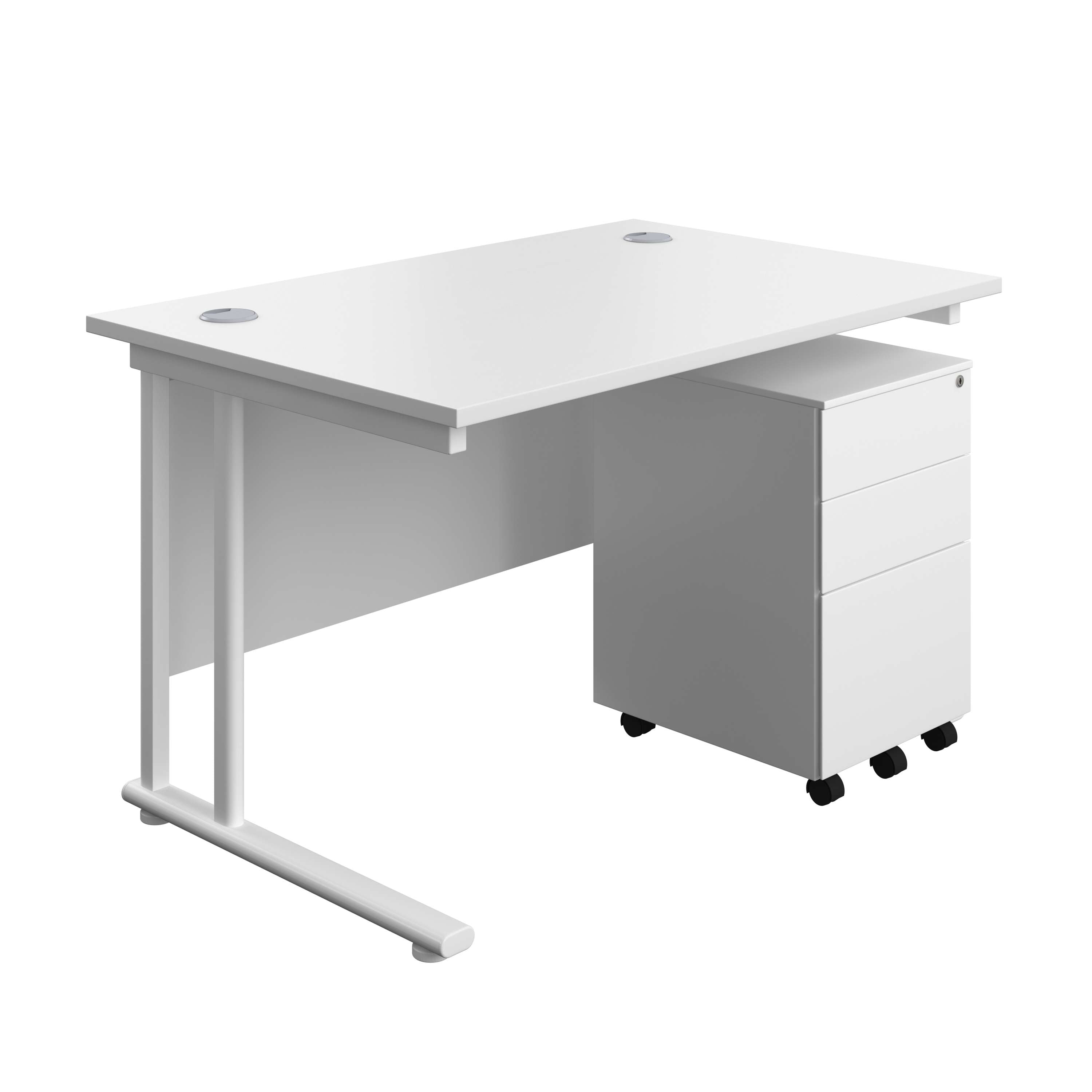
The range covers both ends of that spectrum. For teams that need dedicated, upright fixed workstations rather than adjustable ones, the Twin Upright Left Hand Radial Desk and its right-hand equivalent suit corner configurations where stability and desk footprint matter more than adjustability. For departments wanting a fixed desk with integrated storage, the Twin Upright Rectangular Desk with steel pedestal pairs a stable frame with three drawers, useful for finance, admin, or reception roles that need secure storage close at hand.
Pro Tip: Before ordering across a whole floor, trial one dual-motor sit-stand desk and one fixed desk side by side for two weeks. Watching which one people actually adjust tells you more than any spec sheet.
What should you check before ordering and installing a desk?
A desk that looks right on a product page can still cause problems once it’s on the floor. A short checklist at order stage avoids most of them.
- Confirm clearances first. Measure the space for the desk at its full standing height, not just its footprint at desk height, including any wall-mounted cable trays or shelving above it.
- Check the load rating. Dual monitors, a monitor arm, a laptop dock, and a desk lamp add up faster than most people expect; ask for the weight capacity in writing.
- Ask about monitor arm compatibility. Not every sit-stand frame takes a standard clamp-mount arm cleanly, particularly on narrower desktop widths.
- Sort cable management before delivery day, not after. Cables that aren’t routed through the frame will snag or stretch during height changes and shorten the desk’s working life.
- Ask the supplier directly about stability testing and warranty terms. A reputable supplier should be able to tell you the frame’s cycle rating and what the warranty covers if a motor fails.
- Confirm delivery and installation logistics up front. Alxr provides nationwide delivery and installation, which removes the usual headache of coordinating separate delivery and assembly contractors across multiple sites.
- Set the desk correctly on day one. Elbows at roughly 90 degrees, screen top at eye level, and feet flat on the floor or a footrest, whether the desk is fixed or adjustable.
Making the habit stick: breaks, posture, and your legal duties
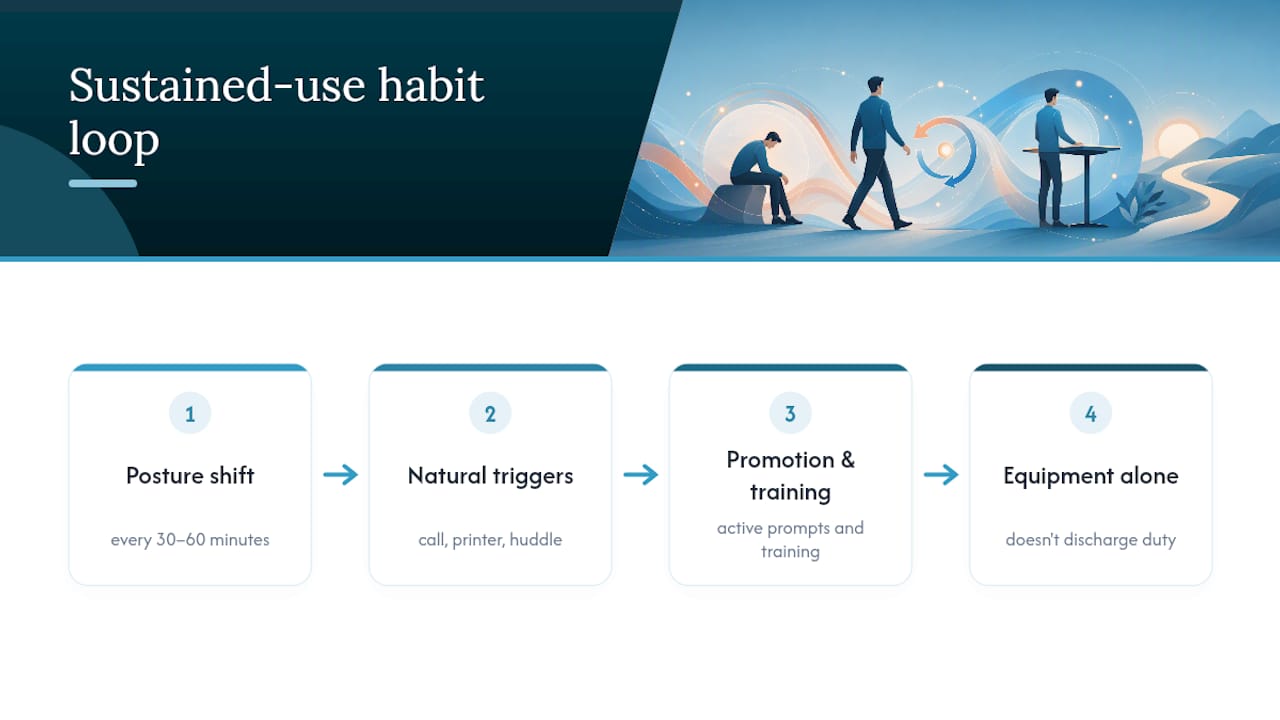
Buying the desk is the easy part. The HSE’s guidance on display screen equipment is clear that employers must plan work routines allowing frequent short breaks or changes of activity, but it sets no legal requirement for adjustable-height desks specifically. A sit-stand desk doesn’t discharge that duty on its own.
Aim to shift posture every 30 to 60 minutes, and use natural breaks (a phone call, a printer run, a team huddle) as the trigger rather than relying on memory alone. Some teams use simple break-reminder prompts as an adjunct, not a replacement for actual movement. Network meta-analysis research found that desks combined with active promotion and training outperform equipment alone for sustained use, which matches what most facilities managers already suspect: the novelty of a new desk fades within weeks unless someone keeps the habit alive.
What real users say about switching desk types
Feedback from offices that have made the switch tends to land in a consistent pattern rather than a universal verdict. Staff who already moved through varied tasks (calls, reviews, quick huddles) report the sit-stand desk becomes part of the rhythm of the day within a fortnight, standing for calls and sitting for focused writing without thinking about it.
Others report a slower start. New sit-stand desks often get used enthusiastically for the first week, then default back to sitting once the initial curiosity wears off, exactly the “novelty fade” pattern the research on multicomponent interventions warns about. Teams that paired the new desks with a short briefing on why posture variation matters, rather than just dropping the desks on the floor, reported noticeably better long-term uptake than teams that didn’t.
Fixed-desk users, meanwhile, rarely report dissatisfaction with the desk itself. Complaints tend to centre on drawer space, cable clutter, or the desk simply being the wrong size for the room, practical issues that have nothing to do with adjustability. That’s a useful reminder that for some roles, the humble fixed desk was never the problem in the first place.
What I’d actually recommend if you’re deciding now
If your team genuinely varies tasks through the day, trial a sit-stand desk properly, with training and a real pilot, before rolling it out fleet-wide. The evidence supports behaviour change, not miracles, so pair the desk with promotion rather than expecting it to work alone. Alxr can support that trial with delivery, installation, and guided selection.
— Syed
How Alxr can help you fit out the right workspace
Alxr is an NHS-approved supplier offering nationwide delivery and installation, plus space planning and design support, which matters when you’re fitting out more than a handful of desks and can’t afford guesswork on measurements or logistics. If your team’s decision points toward fixed, upright configurations, the Twin Upright Left Hand Radial Desk and Twin Upright Right Hand Radial Desk give you stable, cost-effective options for corner layouts.

For teams needing built-in storage alongside a fixed desk, the Twin Upright Rectangular Desk with steel pedestal covers admin and reception roles well. Whichever direction your evidence and budget point you, the supplier’s team can arrange a site survey, quote your fit-out, or set up a trial desk before you commit to a full floor order. Get in touch through Workspace to start that conversation.
Sources
- Workplace interventions (methods) for reducing time spent sitting at work | Cochrane
- HSE guidance: Work routine for display screen equipment (DSE) users
- The impact of sit‑stand desks on full‑day and work‑based sedentary behaviour of office workers: a systematic review (2024)
- Network meta-analysis of active workstation interventions (2023)
FAQ
Is a sit-stand desk worth it for a home office?
Yes, for most people who alternate tasks through the day, though the evidence supports short-term behaviour change more strongly than long-term health outcomes. Pair the desk with actual habit change, such as standing for calls, rather than expecting the desk alone to deliver results.
How much sitting time does a sit-stand desk actually save?
Cochrane’s review found an average reduction of 84 to 116 minutes a day in the short term, though the underlying evidence quality is rated low to very low. Effects tend to shrink somewhat over three to twelve months.
Do employers legally need to provide sit-stand desks?
No. HSE guidance requires employers to plan work routines that allow frequent breaks or changes of activity, but there’s no legal requirement for adjustable-height desks specifically.
Are desk converters as good as a full sit-stand desk?
Converters are a lower-cost, portable entry point that suit renters and hot-desking setups well, but they compromise stability and long-term durability compared with a full-height sit-stand desk. For daily, sustained use, a dedicated frame tends to hold up better.
Does Alxr offer both fixed and sit-stand desk options?
Yes. Alxr’s catalogue includes fixed upright desks such as the Twin Upright Radial and Rectangular ranges alongside adjustable options, with nationwide delivery and installation included. Current pricing is available directly on the Alxr website.